
Getting Started With Serial EEPROM
Our Serial EEPROM Portfolio
What Is EEPROM?
Watch this three-minute video to learn what EEPROM it is, why it sells, when to choose it and when not to choose it for your application.
How to Select Your Serial EEPROM
When choosing a serial EEPROM, there is a balancing act between cost and density, but the system software will usually drive this requirement. Usually the amount of memory required to complete a project is estimated before the design is completed. The final density purchased is usually 50% larger to allow for future growth.
To better illustrate the process of selecting a specific EEPROM device, here is an example of the types of questions that come up in the design phase:
- Does the microcontroller have a programmable serial port that can support I2C, SPI, Microwire or UNI/O® serial buses?
- How many spare I/O ports on the microcontroller are available for use by the EEPROM?
- Is your microcontroller pin limited?
- Is it cheaper to switch to a bigger microcontroller or reduce the I/O ports required to interface with the serial EEPROM?
- Do you need to use less I/O pins with memory on the microcontroller to free up the extra I/O pins for other applications?
- Are there any other peripherals in the system design that use a serial interface such as I2C, SPI or Microwire?
- If no serial ports are available, will the serial interface be emulated by bit banging several I/O ports?
- How much memory will be required to complete the project and will it be necessary to upgrade to a larger memory size in the future?
- If more memory is needed, will a larger package impact the design?
- If more memory is needed will cascading serial EEPROMs be a viable option
- Is the bus speed known so that a bus type can be selected?
- If there is a limitation of I/O ports, will the slower speeds of the I2C or UNI/O bus meet the system requirements since they use the fewest I/O ports, two and one respectively?
- Are there any space constraints in the application that dictate a smaller package or die/wafer?
- Is there a minimum or maximum voltage or operating temperature requirement?
In many cases, the application notes and technical briefs you read will point you directly to the part you should use. Finally, contact your contact your local Microchip representative and discuss your findings with one of our knowledgeable sales staff or Field Applications Engineers (FAEs). They will be happy to help you with your serial EEPROM selection.
Product Selection Resources

MemoryLink Product Selection Tool
The MemoryLink Product Selection Tool is an interactive discovery tool that provides an encompassing overview of all our memory products and supporting development boards.

Memory Xplorer Embedded Memory Evaluation Platform
Our Memory Xplorer evaluation platform makes it easier to choose a device by allowing you to visually evaluate our I2C, SPI and single-wire EEPROM devices, boosting your confidence in the product you selected.
Microchip University Courses
Strategies for Nonvolatile Memory Reliability
This class covers how EEPROM and NOR Flash memory operate, wear out and fail, as well as several strategies for maximizing performance and reliability of memory devices in applications.
Practical I2C: Introduction, Implementation and Troubleshooting
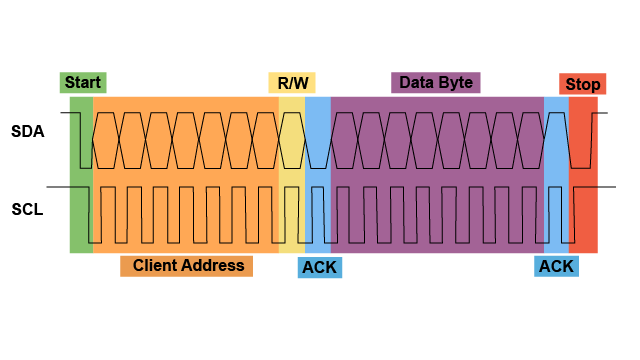
This class covers how to implement the I2C protocol on 8-bit PIC® microcontrollers (MCUs) using MPLAB® Code Configurator (MCC).
NVRAM and EEPROM Selection and Design
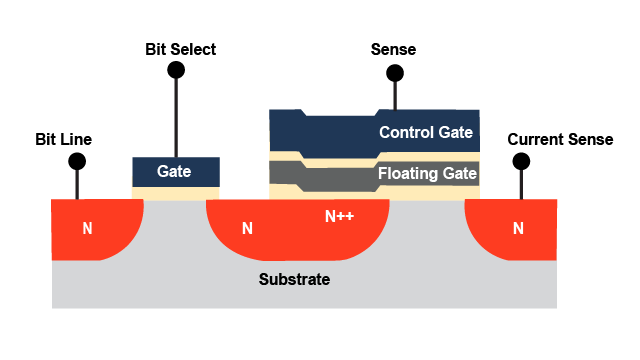
This class is an overview of external nonvolatile memories. We will discuss the different types, how they operate and why some can wear out and discuss some of the tradeoffs between the various types in applications where they fit best.