
We detect you are using an unsupported browser. For the best experience, please visit the site using Chrome, Firefox, Safari, or Edge. X
Maximize Your Experience: Reap the Personalized Advantages by Completing Your Profile to Its Fullest. Update Here
Stay in the loop with the latest from Microchip. Update your profile while you are at it. Update Here
Complete your profile to access more resources. Update Here

Transient Voltage Suppressors (TVS)

High-Quality and Flight-Critical Transient Voltage Suppressors/ESD Suppressors


Designed to protect sensitive components from electrical overstress due to events like lightning strikes, inductive load switching and electrostatic discharge, a Transient Voltage Suppressor (TVS) limits a voltage spike to a safe level. A TVS diode provides this critical protection by going into avalanche breakdown within no more than a few nanoseconds after a strike, clamping the transient voltage and routing its current to the ground. This solution can significantly improve equipment reliability and reduce losses due to transient voltage-related failures.

Our broad portfolio includes both unidirectional and bidirectional discreet plastic TVS devices with power levels ranging from 600W to 130 kW. These solutions are supported by qualification test plans and reliability monitoring that are in line with the best industry-standard practices.

Why Choose Our TVS Devices?


Advanced Packaging Innovations

Utilize cutting-edge packaging technology, including new plastic packages, for enhanced performance and reliability
Electrical Testing Standards

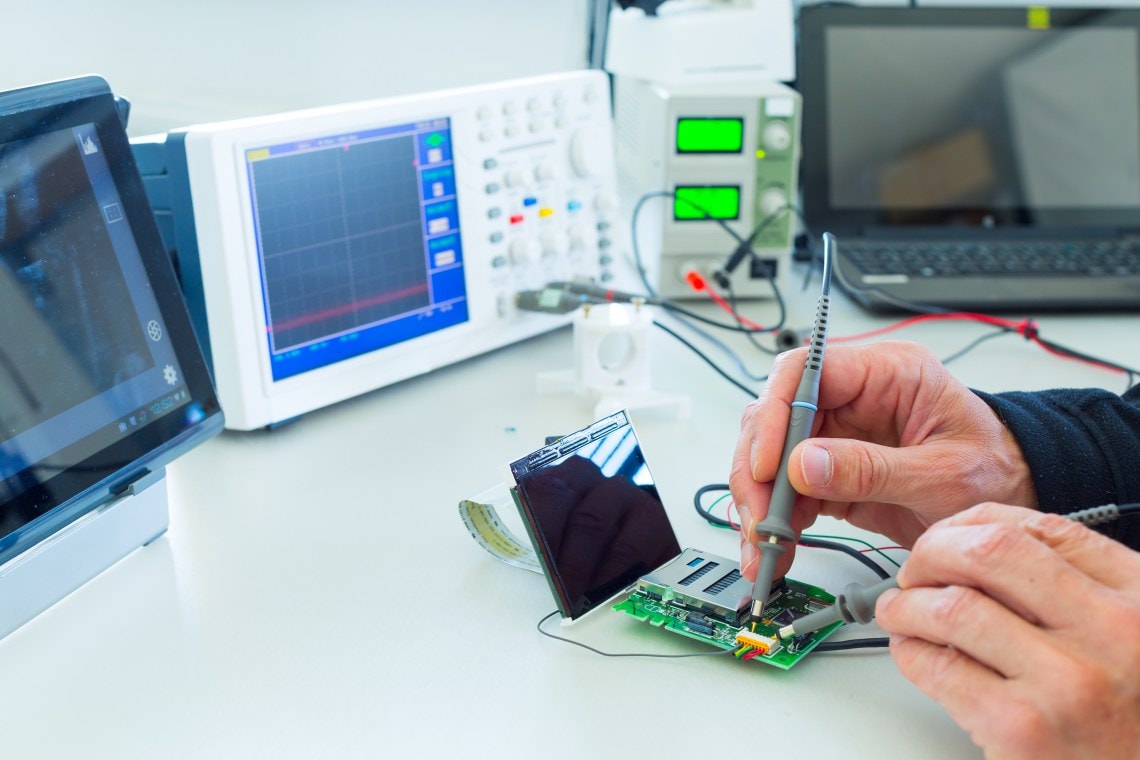
Employ comprehensive electrical testing capabilities

Reliability Assurance

Maintain ongoing reliability monitoring to ensure continuous performance standards

Quality Control in Manufacturing

Utilize controlled die foundries, along with designated assembly and screening facilities

Documentation


Brochures

High-Reliability Non-Hermetic TVS Products Portfolio
COTs Flyer Non Hermetic Product
MDA Vertical Array Sell Sheet
JANP Spice Quick Reference Guide

Application Notes

MicroNotes for High-Reliability Discrete Solutions Sell Sheet
MicroNote 050: Radiation Hardened Performance of Discrete Semiconductor Products
MicroNote 108: Determining Clamping Voltage Levels for a Range of Pulse Currents
MicroNote201 An Introduction To Zener Diodes
MicroNote202 Zener voltage Regulation with current changes
MicroNote006 Soldering Guidelines for Glass MELF Diodes
MicroNote129 Upscreening commercial TVS diodes for avionics and robust environments or applications
MicroNote108 Determining Clamping Voltage Levels for a Range of Pulse Currents
MicroNote107 Cross Referencing TVS Devices
MicroNote104 Using the Power vs Time Curve
MicroNote060 Mil-PRF-19500 qual chips vs Mil PRF 38534 qual chips
MicroNote035 Metallographic cross sectioning techniques for performance of destruct physical analysis of glass encapsulated diodes
MicroNote401 Introduction to Schottky Rectifiers
MicroNote303 Rectifier Bridges and Dual Rectifiers
MicroNote205 Zero Temperature coefficient Reference Diodes
MicroNote402 High Temperature Reverse Bias (HTRB)
MicroNote203 Zener Voltage Regulation with Temperature
MicroNote 501 Intro to Rectifier Bridges
MicroNote601 Nanosecond SCR switch for reliable high current Pulse generators and Modulators
MicroNote602 UPGA301A Pulse Circuit Analysis
MicroNote603 Anode Gate Thyristors and High Current AC Applications
MicroNote701 PIN Diode Fundamentals
MicroNote1002 Calculating Reliability using FIT & MTTF: Arrhenius HTOL Model
MicroNote304 Introduction To Photovoltaic By-Pass diodes
MicroNote070_Final.pdf
MicroNote 128: Unidirectional/Bidirectional TVS Differences
MicroNote 204 Zener Voltage Regulation and Thermal Resistance
MicroNote 107: Cross Referencing TVS Devices
MicroNote 101: A Primer on TVS Devices
MicroNote 102: An Introduction to TVS Devices
MicroNote 103: What is a TVS?
MicroNote 104: Using the Power vs Time Curve
MicroNote 105: What is a Thyristor Surge Protector Device
Rectifier Bridges and Dual Rectifiers
MicroNote 110: Parasitic Capacitance in TVS
MicroNote 111: Parasitic Lead Inductance in TVS
MicroNote 112: Series Stacking TVS for Higher Surge Current
MicroNote 113: Parallel Stacking TVS for Higher Surge Current
MicroNote 114: Derating TVS at Elevated Temperatures
MIcroNote 115: Derating TVS for Varying Pulse Widths
MicroNote 116: Transformer Protection
MicroNote 109: Protection from Electrostatic Discharge
MicroNote 117: Protecting USB Data I/O Ports
MIcroNote 118: TVS/Chip Product Overview
MicroNote 122: TVS Protection Across High Data Rate and RF Lines
MicroNote 127: Lightning Protection for Aircraft Electrical Power and Data Communications Systems
MicroNote 129: Upscreening Commercial TVS Diodes for Aviation and Robust Environments or Applications
MicroNote 130: Overall Selection of TVS Part Numbers
MicroNote 121: Protecting Data I/O Parts with TVS Arrays
MicroNote 123: Effective Use of Space Saving TVS Arrays
MicroNote 125: Selecting a TVS
MicroNote 120: Selecting TVS with PPP and Waveform Considerations
MicroNote 131: Tutorial on Transient Voltage Suppression (TVS) Selection
MicroNote 133: Repetitive Surge on TVS
MicroNote 134: Zeners and TVS: Can Either be Used for the Same Application?
MicroNote 135: Failure Mechanisms for TVS
MicroNote 106: Crowbars and Clamps
MicroNote 30: Metallurgical Bond Evaluation Methods for Diodes
MicroNote 020: Plating and Solder Dipping
MicroNote 010: How to Quickly Obtain Spice Data
Introduction to Rectifiers
Rectifier Reverse Switching Performance
MicroNote070 Thermal Management for Discrete Semiconductors
MicroNote 005: Care, Handling, and Solder Profile of Diodes
MicroNote 132 Aircraft Lightning Protection
Micronote 126:Aircraft Lightning Protection for ARINC & AFDX Protocols
Micronote1010: Military Device (JAN through JANS) Reliability Statement

Live Chat

Need Help?

Privacy Policy