
RTG4™ FPGAs: A Journey From QML-V Qualification for Traditional Space to RT Mil-Plastic Qualification for New Space
Microchip’s RTG4™ FPGAs with lead-free, flip-chip bumps have achieved Qualified Manufacturer’s List (QML) Class V and JEDEC qualifications, setting a new standard for mission-critical and modern space applications, with stringent cost and schedule requirements. Discover how this innovation supports both traditional and New Space missions with low-power efficiency and configuration upset immunity.
Preparing for the Journey to Space
Imagine preparing for a journey to the farthest reaches of space. Every component in your spacecraft must be robust, reliable and ready to withstand the harshest environments. Just as a satellite must be resilient and adaptable to operate in extreme conditions, the electronics at the heart of a mission must combine cutting-edge performance with uncompromising safety. RTG4™ FPGAs with lead-free, flip-chip bumps are engineered for the future—meeting the highest standards and enabling mission success.
In this blog post, you’ll learn how Microchip’s RTG4 FPGAs have achieved the prestigious QML-V qualification with lead-free, flip-chip bump technology and how we continue to offer a wide range of qualification and screening options, including JEDEC, to support diverse mission requirements. We’ll explore what this means for space applications, the rigorous testing behind the qualification and how this advancement supports low-power design and mission assurance for critical aerospace and defense projects, including scalable options for New Space programs.
Traditional space missions demand components that deliver exceptional performance, reliability and long-term durability in the harshest environments. Microchip’s solutions have earned over 60 years of flight heritage, and we have established a legacy of supplying space-qualified micro-electronics that meet the industry’s most stringent standards. Governed by the Defense Logistics Agency (DLA), QML Class V represents the highest qualification level for space components mandated for the most critical missions such as deep-space exploration, human-rated spacecraft and national security programs. Featuring low-power operation and configuration upset immune architecture, our RTG4 FPGAs are the trusted building blocks for traditional space systems where mission assurance and lifetime reliability are paramount.
In contrast, the rapidly expanding New Space sector emphasizes shorter development cycles, higher production volumes and lower cost while still requiring reliable performance in radiation environments. To address these needs, we introduced the RTG4 Mil-Plastic family qualified to JEDEC standards and screened through the Radiation-Tolerant (RT) Mil-Plastic flow, which includes full electrical testing across the military temperature range of –55 °C to +125 °C. In the past, the only alternative was Commercial Off-the-Shelf (COTS) devices, but those lacked reliability. RTG4 Mil-Plastic devices provide a cost-effective alternative that uses the same silicon die as QML-qualified parts, which offers the same silicon radiation and reliable performance in a non-hermetic plastic package, empowering reliability and mission pedigree.
What Is QML-V and Why Does It Matter?
Qualified Manufacturers List, Class V (QML-V) is the highest level of qualification for space-grade components so that devices can withstand the extreme conditions of space. Achieving this qualification is essential for components used in the most critical missions, where failure is not an option. Microchip’s RTG4 FPGAs with lead-free, flip-chip bumps now meet this rigorous standard. Notably, RTG4 remains the only radiation-tolerant FPGA in its class to hold QML-V certification, providing confidence to engineers and mission planners alike.
The Innovation: Lead-Free, Flip-Chip Bump Technology
The RTG4 FPGA’s advanced flip-chip package uses bumps to connect the silicon die to the package substrate. The new lead-free version adheres to industry standards and extends the longevity of the product, while maintaining the same high performance and reliability. Extensive reliability testing, including up to 2,000 thermal cycles from −65°C to 150°C, confirmed the robustness of the lead-free connections. The interface passed MIL-PRF-38535 inspection criteria and showed no signs of tin whiskers, a common reliability concern in lead-free soldering. This same lead-free bump technology is also used in the latest RT PolarFire® FPGAs, which enables consistency across our next-generation space-grade FPGA portfolio.
Seamless Migration for Designers
One of the key advantages of the lead-free, flip-chip bump is that it is entirely internal to the FPGA package. This means that designers do not need to change their board assembly flow, reflow profile or thermal management strategies when adopting the new RTG4 FPGAs. The transition to lead-free is seamless so that existing designs can benefit from the new technology without additional engineering effort.
Flip-Chip Bump Inside Package
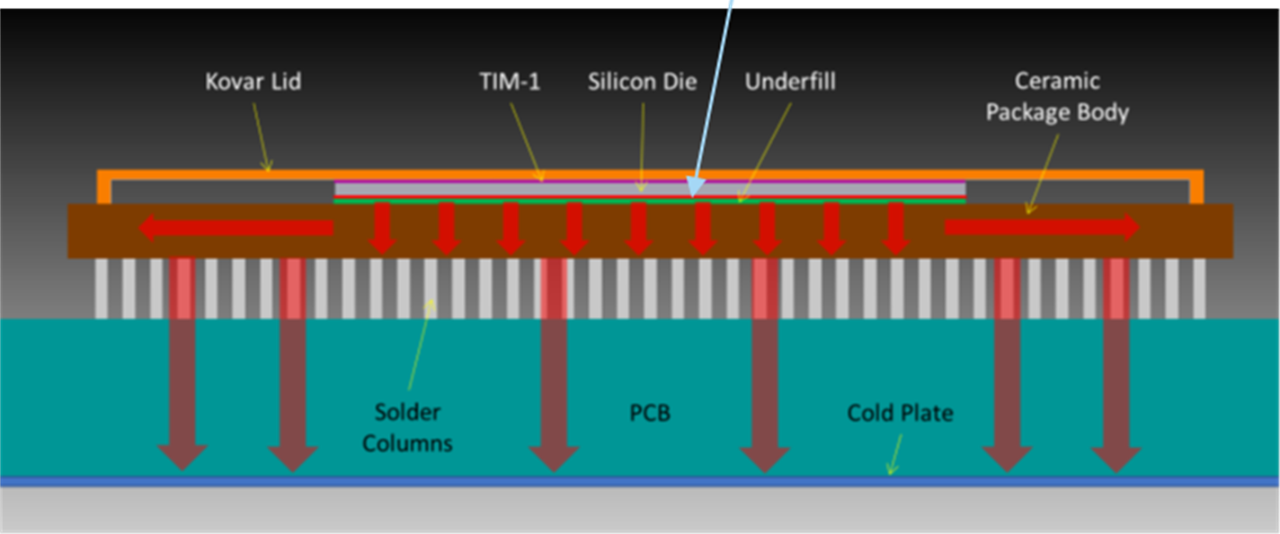
Figure 1: Lead-Free, Flip-Chip Bump Package Cross Section
Scalable Qualification and Screening Options
RTG4 FPGAs are offered across a wide spectrum of qualification and screening flows, including QML V, QML Q and RT Mil‑Plastic options. As you move higher in qualification level, the screening becomes more rigorous. QML V units undergo the most exhaustive processes, including extensive burn‑in, temperature cycling and life testing, while QML Q offers a slightly reduced, but still stringent, screening level. The RTG4 Mil-Plastic devices have achieved their first flight heritage and are available to purchase with no minimum order quantity. This tiered qualification structure gives you the flexibility to choose the appropriate mix of reliability, performance and cost depending on mission needs, knowing that higher qualification comes with increased screening and confidence. For a full listing of Microchip FPGA and their DLA drawing numbers, refer to the DLA Cross Reference Guide.
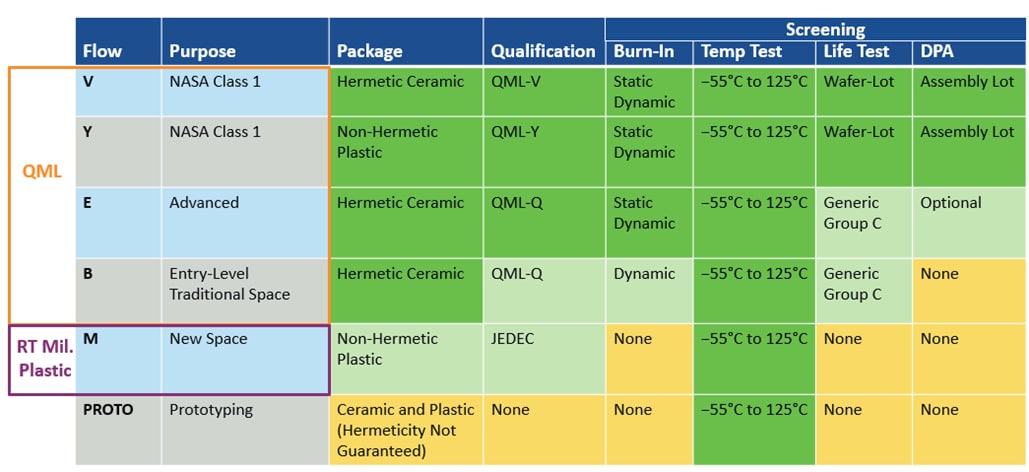
Figure 2: RT FPGA Qualification and Screening
Want More?
Empower your next space design with low-power and radiation-tolerant FPGAs that combine proven reliability, scalability and design flexibility.
For more information on RTG4 and RT Mil-Plastic FPGAs or to discuss your project needs, contact product marketing engineer, Kritika Gautam, at kritika.gautam@microchip.com. Explore the future of space electronics with Microchip’s space FPGAs today.