
Building Cybersecurity Trust in Connected Systems: Why IEC 62443 Certification Matters
Driven by Industry 4.0, IoT adoption and smart infrastructure, technology continues to penetrate all areas of the consumer and business world. Connected systems are expanding across residential, industrial and commercial environments. This means cybersecurity is no longer optional—it is foundational and essential.
From smart home devices and factory automation systems to critical infrastructure and commercial control networks, digital functionality and connectivity have become integral to our work and personal lives. With this growth comes increased vulnerability and the risk of compromises to cybersecurity. This can manifest as data breaches, operational downtime or more malicious threats such as financial theft and ransomware attacks. As such, OEMs are demanding stronger, independently verified cybersecurity assurances from their technology partners and device suppliers. For suppliers themselves, certification can mean competitive advantage born out of the confidence and preference certification brings.
In this blog post we’ll explore the response to a clear and pressing need for credible standards frameworks for cybersecurity and companies’ alignment and certification to them.
Standards Bring Order and Instill Confidence
Over many years—and to address a myriad of areas of technology innovation, notably in electronics—internationally recognized, well-structured, progressive and trusted standards have been pivotal in facilitating a safe, controlled, evolutionary path.
When it comes to cybersecurity, standards can certify and underscore a company’s secure development processes, support Cyber Resilience Act (CRA) readiness and increase customer assurance and confidence. The IEC 62443 series fits this bill; it is an internationally recognized set of standards focused on cybersecurity for Industrial Automation and Control Systems (IACS). As industries digitize operations and connect critical systems to networks, the standard provides a structured framework and new product development process for companies like Microchip Technology that supply advanced semiconductor devices for use in many kinds of industrial equipment.
Understanding IEC 62443-4-1
IEC 62443-4-1 addresses the Secure Development Lifecycle (SDL). It defines the processes and practices organizations must implement to ensure products are designed, developed and maintained with cybersecurity as a core priority. It is more than a compliance achievement—it reflects a systematic commitment to embedding security across the entire product lifecycle.
IEC 62443‑4‑1 evaluates organizational secure development lifecycle processes, whereas product security requirements are addressed in other parts of the IEC 62443 series (e.g., IEC 62443‑4‑2). This ensures security is systemic—not reactive.
Key elements of the standard include:
- Defined threat modelling and risk assessment process
- Defined security requirements process
- Documented secure design principles and design governance process
- Defined secure implementation process
- Controlled, documented and traceable implementation process
- Defined verification and validation process
- Established vulnerability management and patch management processes
Maturity Levels Provide a Pathway
IEC 62443-4-1 has multiple maturity levels to reflect the sophistication and consistency of an organization’s secure development practices. Maturity Level 1 (ML1) is the lowest level and is characterized by ad-hoc, inconsistent and often undocumented processes; it therefore has limited value.
The next level—ML2—goes much further and demonstrates that:
- Secure Product Development Lifecycle processes are documented and institutionalized
- Security practices are consistently applied across teams and projects
- Security controls are repeatable and measurable
- Processes are independently audited and verified
For customers, ML2 certification signals that security is not ad-hoc or isolated to product lines—it is integrated into the organization’s broader development culture. Therefore, it can give a high degree of cybersecurity confidence.
Progressing from ML2 takes us to ML3 which indicates that a company has not only a documented and managed Secure Development Lifecycle (SDL) but also shows that it is practiced and is repeatable across the whole business. In addition, this next level requires that practices are evidence-based and that personnel competence and expertise to execute the procedures is demonstrable.
Finally, ML4 requires that processes are measured using relevant and insightful metrics and continuously optimized based on performance data.
Why Independent Certification Really Matters
Independent certification offers several critical benefits:
- Audit-Backed – IEC 62443-4-1 certification provides external validation that secure product development lifecycle processes meet internationally recognized standards. This reduces ambiguity and strengthens confidence across the supply chain.
- Reduced Supply Chain Risk - Organizations are under pressure to ensure their suppliers adhere to rigorous cybersecurity practices. A certified secure product development lifecycle helps mitigate systemic risk introduced through third-party components.
- Simplified Customer Evaluations - Many customers conduct extensive security assessments before integrating components into their systems. Certified vendor processes streamline these evaluations by providing documented evidence of compliance with global best practices.
- Regulatory Readiness - Emerging regulatory frameworks—such as the European Union’s CRA—are raising expectations for cybersecurity governance and product lifecycle management. A standards-based secure development approach positions companies and their customers to meet these evolving requirements more efficiently.
Microchip’s Cybersecurity Journey
Microchip Technology’s devices and technologies are core elements in many of the products and sectors described in this blog post. Meeting the requirements of standards to allow customers to confidently integrate our products in a world where cyber resilience is essential is a high priority.
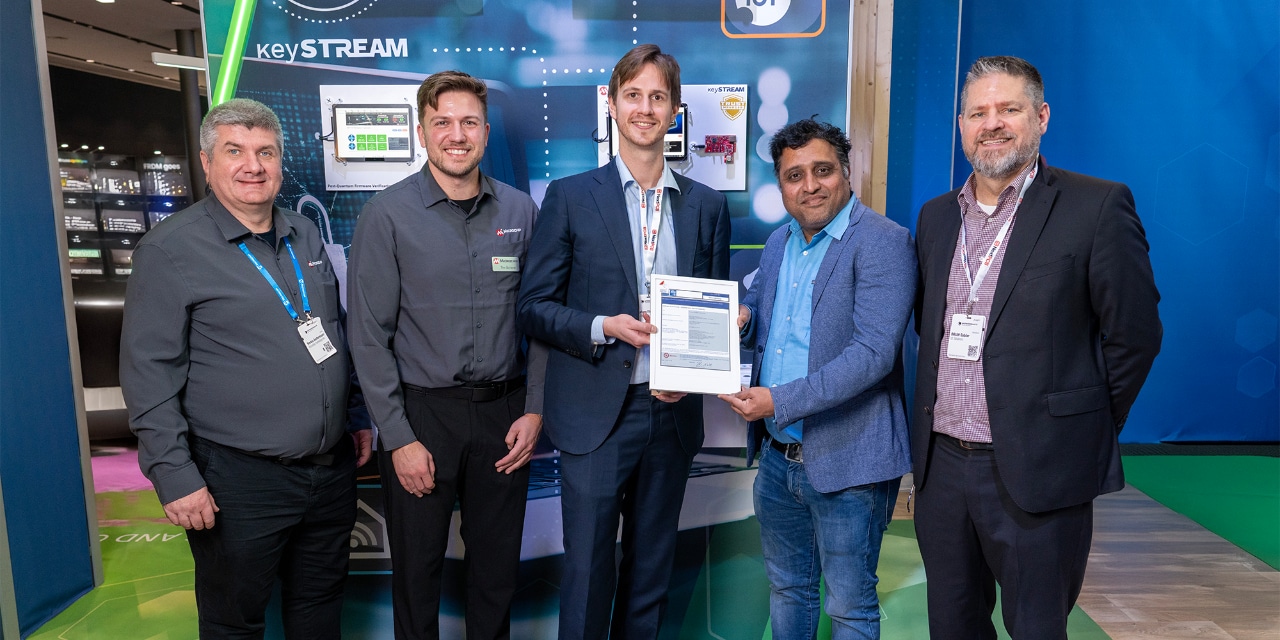
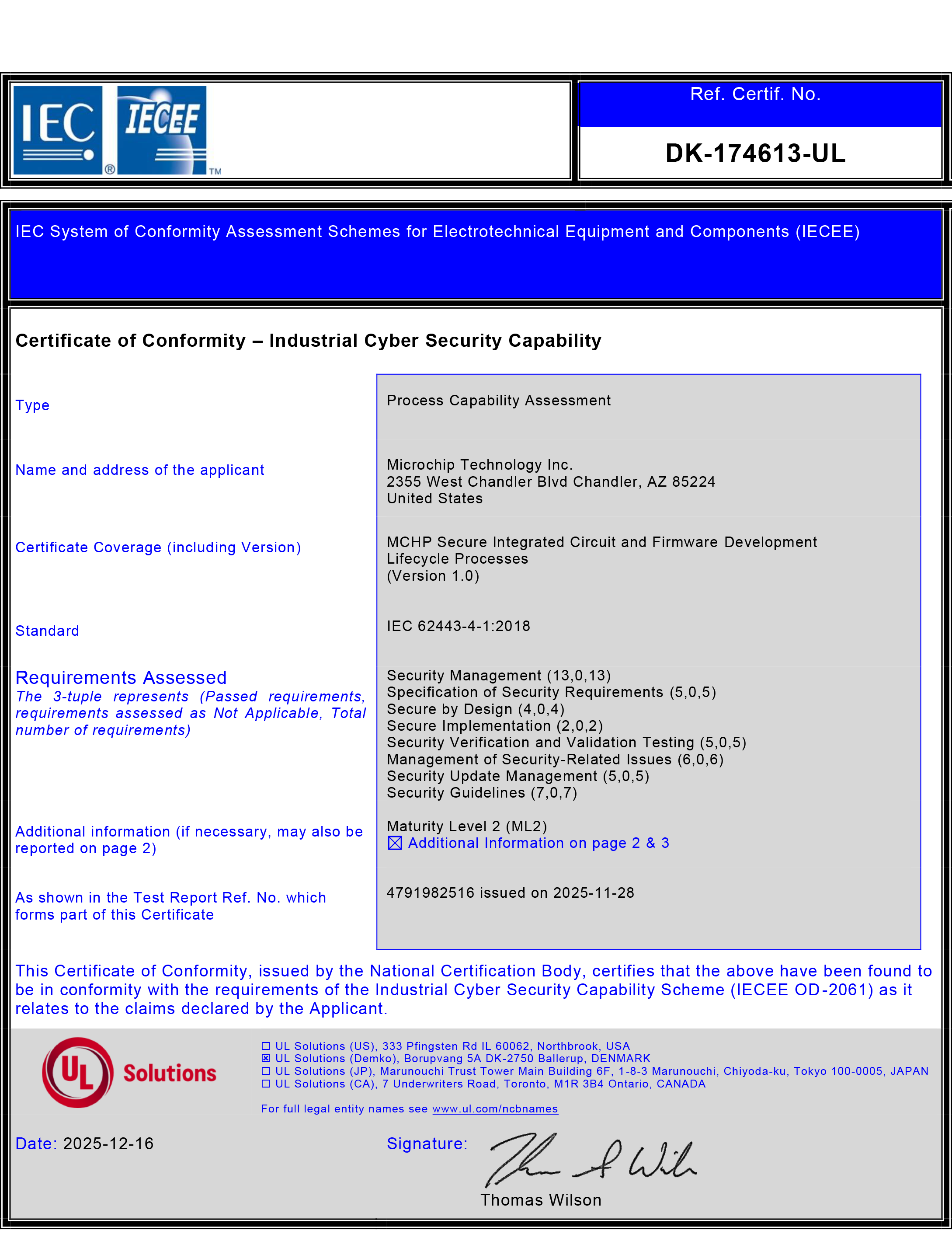
We have recently achieved certification from UL Solutions to IEC 62443-4-1 ML2 for Industrial Automation and Control Systems. Recognizing the importance of continual progress in this area, we are already working towards ML3 to continue to ensure our products and technologies have no barriers to adoption in next generation connected systems.
 |