
Smart Steering: Get a Grip on Automotive Safety With Microchip’s Hands-Off Detection Technology
Enhance automotive safety and comfort with our single-chip Hands-Off Detection (HoD) and heating solution—enabling real-time driver monitoring, regulatory compliance and simplified design for vehicles.
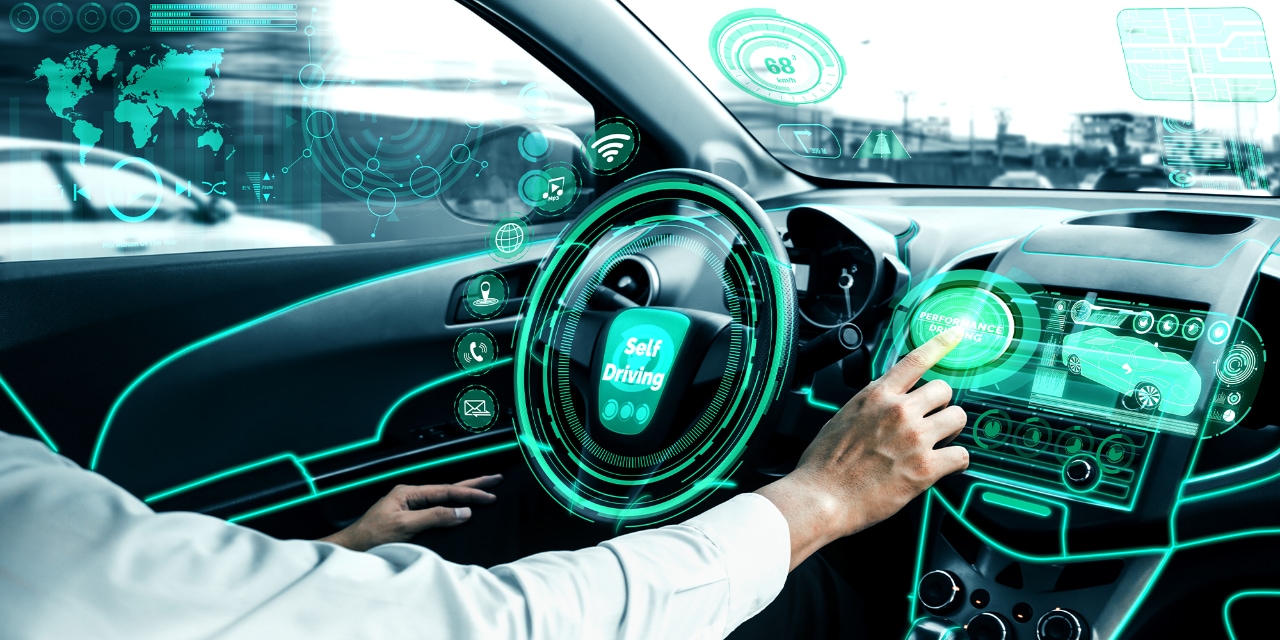
As vehicles become increasingly automated, ensuring driver engagement remains a top priority for both manufacturers and regulators. Hands-Off Detection (HoD) technology addresses this need by embedding capacitive sensing directly into the steering wheel, enabling continuous monitoring of whether the driver’s hand or hands are present. This real-time detection is vital for advanced driver assistance systems (ADAS) and semi-autonomous vehicles, where the driver must be prepared to assume control at any moment.
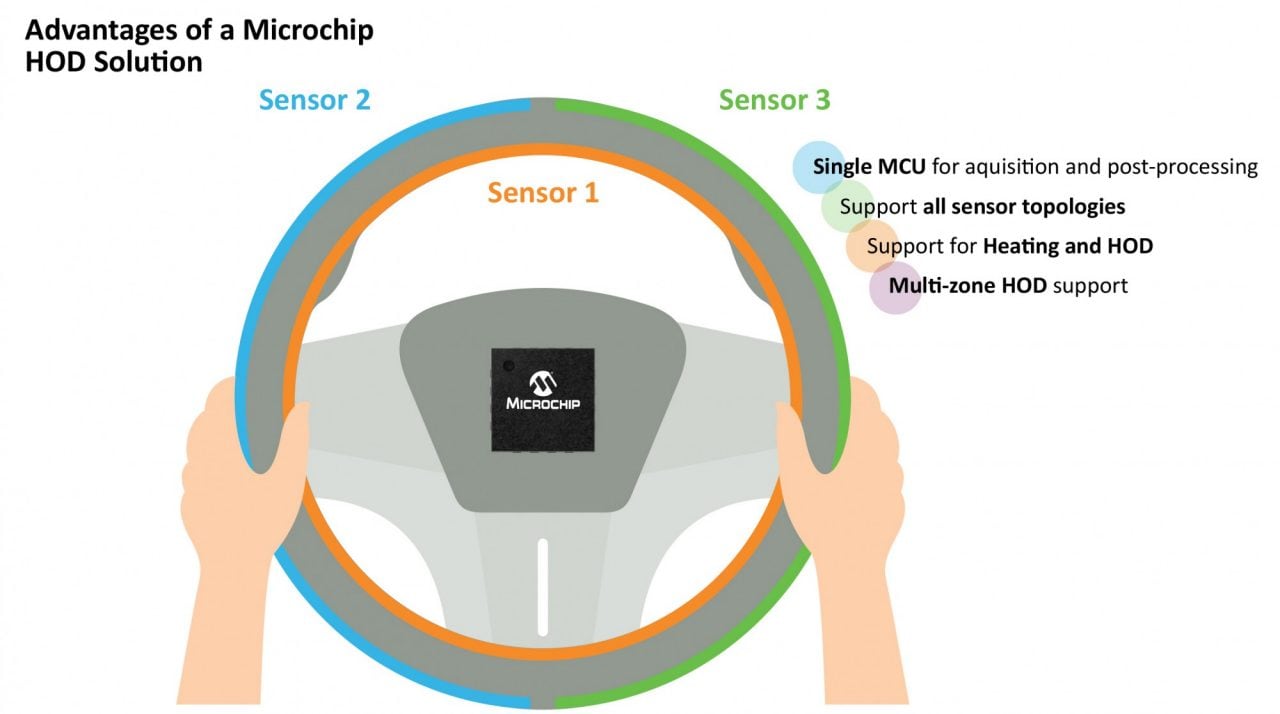
Our HoD-enabled microcontrollers (MCUs) are engineered for high sensitivity and reliability, providing accurate hand detection even under challenging conditions such as varying humidity, temperature extremes or when the driver is wearing gloves. By instantly relaying the driver’s engagement status to the vehicle’s control systems, HoD technology helps prevent misuse of automated features and significantly reduces the risk of accidents due to inattention. Beyond basic hand presence detection, our HoD solutions support multi-zone detection. This feature enables the system to monitor grip intensity and hand positioning across different regions of the steering wheel. Importantly, our multi-zone functionality is achieved without increasing chip count or cost, thanks to the efficient signal processing capabilities of the MCUs. The HoD solution includes self-diagnostics to support functional safe implementations.
 |
As vehicles become more sophisticated, regulatory bodies are working to implement mandates to keep drivers safe, making HoD a foundational element in the design of modern, safety-focused vehicles.
In Europe, the United Nations Economic Commission for Europe (UNECE) has established Regulation No. 79, which mandates the use of driver monitoring systems, including HoD, for vehicles equipped with Level 2 and higher automated driving functions. This regulation requires that vehicles must be able to detect the driver’s engagement and readiness to take control, making HoD a mandatory feature for compliance. A common Lane Keep Assistant is an exemplary level 2 driving assistant.
In the United States, the National Highway Traffic Safety Administration (NHTSA) is actively evaluating requirements for driver monitoring systems as part of its efforts to regulate automated driving technologies. Similar regulatory advancements are underway in Japan, Korea and China.
Our HoD solutions are designed to help OEMs achieve compliance with UNECE R79, EU GSR and emerging NHTSA guidelines, providing a reliable and cost-effective path to regulatory approval.
Microchip’s Single-Chip Architecture for Heating and Sensing
Traditional HoD systems typically rely on a combination of discrete sensors and multiple ECUs. There is one heating element with a dedicated heating control unit and HoD sensors with another separate processing unit, resulting in increased complexity, larger board space requirements and higher costs for automotive manufacturers. Our innovative single-chip architecture streamlines this process by integrating both capacitive sensing and heating control into a single MCU.
This unified approach means that the MCU combines all functions, including HoD signal acquisition, real-time data processing, environmental compensation, heating control and communication. By consolidating these tasks, we eliminate the need for external signal acquisition processors or additional control modules, which not only reduces the overall bill of materials but also simplifies system design and integration.
Microchip’s single-chip solution is engineered for automotive environments, offering robust performance, low power consumption and highest electromagnetic sustainability. Its compact footprint helps manufacturers save valuable board space, making it easier to fit within the constraints of modern steering wheel designs. The architecture is designed to be cost-effective and ready for rapid validation, enabling automotive Tier1/OEMs to accelerate development cycles and bring compliant, safety-focused vehicles to market faster.
Sensor and Heating Integration
Heated steering wheels are a popular comfort feature, especially in regions with cold winters. Combining heating with sensor technology allows manufacturers to offer both comfort and safety at the lowest cost and complexity. The heating element doubles in functionality as the HoD and the sensor, allowing the driver’s experience to be seamless and ADAS systems to remain effective. Combining heating and sensing in the same element presents unique challenges, such as time sharing of heating and sensing. While +98% of the time is available for heating, some OEMs might shy away from the approach even if single element heating and sensing will be the lowest cost solution. We address this support of innovative sensor topologies:
- Stacked sensors: Separate layers for heating and sensing.
- Coplanar sensors: Side-by-side layout for compact integration.
This dual-functionality approach is suitable for steering wheel designs where space and weight are at a premium, guided by the focus of the OEM.
Development Resources and Software Support
We provide a comprehensive suite of development resources to support the integration of HoD technology into automotive platforms. These resources include detailed reference designs, application notes and software libraries that help engineers implement capacitive sensing and heating integration effectively. The development tools are designed to streamline the design process, offering simulation environments and evaluation kits that allow for rapid prototyping and testing. In addition, technical support and documentation are readily available to assist developers in overcoming challenges related to sensor calibration, environmental compensation and regulatory compliance. By leveraging these resources, automotive manufacturers can accelerate the development cycle and be confident that their HoD systems meet both performance and regulatory requirements.
Supported MCU Families
Our HoD solution is available across several automotive-grade MCU families including the AVR® DA, dsPIC33Cxx, PIC32CM JH and SAMC21 devices.
Beyond passenger vehicles, our HoD technology is applicable to electric two-wheelers, commercial fleets and emerging autonomous platforms. Its scalability and integration capabilities make it a versatile choice for OEMs looking to meet safety standards while optimizing design.
Conclusion
Our integrated HoD and heating solutions represent a significant advancement in driver monitoring technology. By consolidating functionality into a single MCU, design is simplified, cost is reduced and development is accelerated—all while meeting stringent safety and regulatory requirements. By combining sensing and heating control in one MCU, we deliver a scalable, efficient and reliable HoD solution that meets the demands of next-generation automotive safety and regulatory standards.
For more information, check out our HoD and heating solutions page.