
When a Pump Runs Dry: Deterministic Liquid Detection for Pump Protection
Learn how the AVR64DD32 Microcontroller (MCU) and MTCH9010 liquid detection turnkey device work together to create a deterministic lack of liquid alarm system that automatically shuts down a pump before dry running damage occurs. With configurable sensing, stored calibration and low power operation, the architecture provides reliable and scalable pump protection for real world fluid systems.
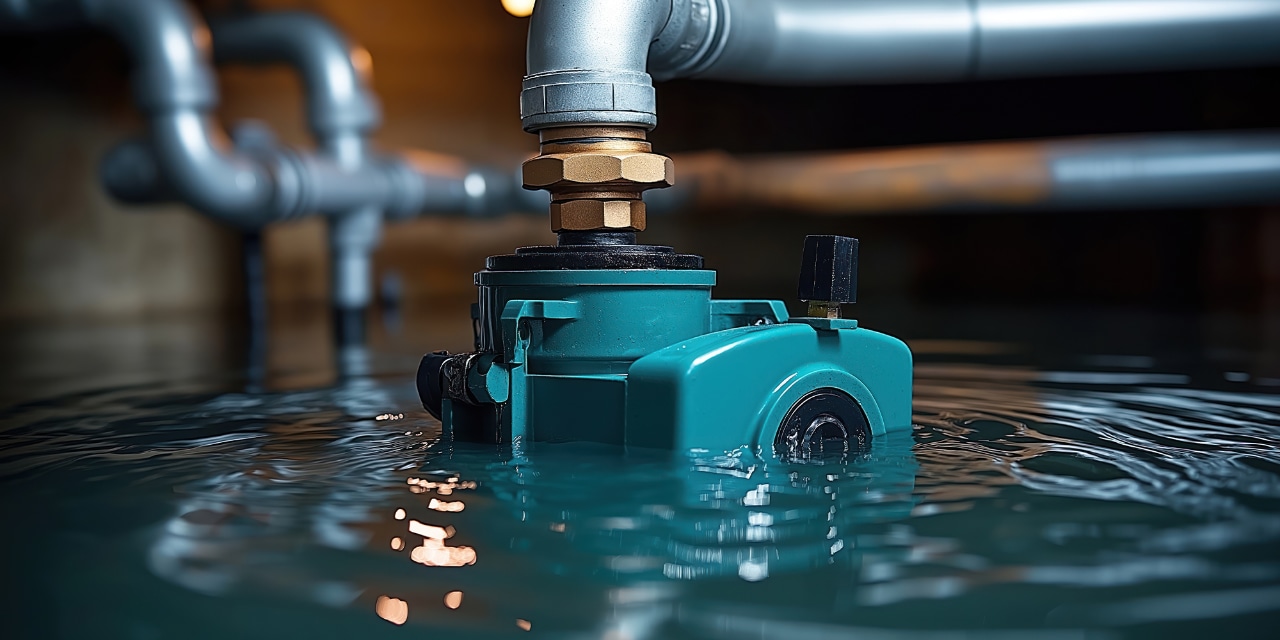
It usually starts quietly.
A pump is running. Fluid is flowing. The system appears stable.
Then the liquid level drops.
Nothing dramatic happens at first. The motor keeps spinning. The controller continues executing firmware as if nothing changed. But inside the pump, seals heat up. Friction increases. Wear accelerates.
Dry running does not fail loudly. It fails expensively.
For engineers designing fluid transfer systems, preventing that moment is not optional. It is foundational to reliability.
This is where a lack of liquid alarm system becomes more than an accessory. It becomes part of the control architecture.
Why Lack of Liquid Detection Must Be Deterministic
In many systems, liquid detection is treated as an afterthought. A float switch. A simple conductive probe. A firmware check that polls occasionally.
But pump protection demands deterministic behavior.
The system must:
- Detect when liquid is no longer present
- Immediately stop the pump
- Avoid false triggering
- Adapt to different container materials and liquid types
- Retain calibration across power cycles
- Operate efficiently in low power environments
Anything less creates uncertainty. And uncertainty in protection systems becomes risk.
The Problem With Traditional Approaches
Mechanical float switches introduce moving parts into environments that already challenge mechanical reliability. They wear out. They stick. They drift.
Basic conductive probes depend heavily on fluid conductivity. They are not adaptable across liquid types and can produce inconsistent readings in changing environments.
Most importantly, these traditional methods rarely offer configurable thresholds or stored calibration. They are fixed solutions for dynamic systems.
Modern embedded systems demand more flexibility and more control.
A System Level Solution Using the AVR64DD32 MCU and MTCH9010
The Lack of Liquid Alarm System Demonstration Application reference design demonstrates a practical architecture built around two core components:
The AVR64DD32 MCU acts as the central controller. It handles system logic, monitors detection signals, manages relay control and processes user input.
The MTCH9010 performs the critical sensing function. It continuously monitors liquid presence and provides a digital DETECT output to the MCU.
A Relay Click board controls the water pumps. A push button provides manual system interaction. Two containers alternate water transfer between each other.
At a system level, this is not just a liquid detector. It is a closed loop protection mechanism.
How the System Thinks: Startup and Calibration
At startup, the system does not assume conditions. It measures them.
First, it determines the reference value when the sensor is dry.
Next, it measures the value when the sensor is fully submerged.
The system calculates the delta between these states.
A threshold is defined based on that delta.
These parameters are then stored in nonvolatile memory using the Enhanced Configuration mode of the MTCH9010.
This is critical.
Calibration survives power cycles. There is no need for repeated manual tuning. The system becomes stable and maintenance free once configured.
Conductive and Capacitive Modes
One of the strengths of the MTCH9010 is its ability to operate in both conductive and capacitive sensing modes.
Conductive sensing is useful when working with liquids that have measurable conductivity, such as water or certain industrial fluids. Capacitive sensing enables detection through non conductive container walls or in environments where electrode contact is not desirable.
More important than the sensing method itself is configurability.
During system setup, the controller establishes a dry reference value and a fully submerged measurement. From these, it calculates a detection threshold appropriate for the installation. That threshold is not fixed. It is tuned to the specific container geometry, electrode placement, liquid type and environmental conditions.
Once validated, the configuration is stored in nonvolatile memory. The system retains its calibration through power cycles and restarts.
Real Time Operation Flow
During operation, the MCU monitors the DETECT signals from both MTCH9010 devices.
If DETECT is high, liquid is present. The pump can run.
If DETECT is low, liquid is not detected. The pump cannot start.
If DETECT transitions from high to low while running, the pump is immediately stopped.
Only one pump can operate at a time. When the user presses the push button, the MCU determines which container contains liquid and selects the appropriate pump.
If the user stops a pump manually, that same pump will restart on the next press until the container becomes empty.
This simple state logic ensures deterministic pump protection.
Power Optimization Built Into the Sensing Layer
The MTCH9010 supports adjustable sleep intervals configured via serial communication.
This allows engineers to balance responsiveness and power consumption.
For battery powered systems or remote installations, this matters. The sensing layer can be tuned to wake less frequently while still guaranteeing safe operation.
Energy efficiency is not an afterthought. It is part of the architecture.
System Architecture at a Glance
Layer | Component | Role |
Sensing Layer | MTCH9010 | Detects liquid presence using capacitive or conductive methods |
Control Layer | AVR64DD32 | Monitors detection signals and executes pump control logic |
Actuation Layer | Relay Click | Switches pump power based on system logic |
Mechanical Layer | Water Pumps | Transfers fluid between containers |
User Interface | Push Button | Manual start and stop control |
Application Scenarios
While demonstrated using water containers, the architecture applies broadly:
- Water reservoir management
- Industrial coolant protection
- Agricultural irrigation systems
- Chemical storage monitoring
- Remote pumping installations
Anywhere dry running is a risk, deterministic detection becomes valuable.
Comparison With Traditional Methods
Feature | Mechanical Float | Basic Conductive Probe | MTCH9010 Based Design |
Automatic Pump Shutdown | Limited | Basic | Deterministic hardware assisted |
Configurable Threshold | No | Limited | Yes |
Calibration Storage | No | No | Yes |
Multi Liquid Support | Limited | Limited | Broad |
Low Power Optimization | Not applicable | Limited | Adjustable sleep control |
Scalability | Low | Moderate | High |
The difference is not incremental. It is architectural.
Key Takeaways
A lack of liquid alarm system must do more than detect fluid. It must protect mechanical systems with deterministic response.
This design demonstrates:
- Hardware assisted automatic pump protection
- Configurable sensing for capacitive and conductive modes
- Stored calibration for long term stability
- Adjustable sleep periods for power optimization
- Clean separation between sensing and control
The result is a scalable and reliable pump protection architecture.
Conclusion: Engineering for the Moment Before Failure
The most expensive failure in fluid systems is the one that could have been prevented.
By combining the AVR64DD32 MCU with the MTCH9010, the Lack of Liquid Alarm System Demonstration Application reference design shows how intelligent sensing and deterministic control logic can eliminate dry running before damage occurs.
It is not about adding another sensor.
It is about designing protection into the system architecture from the beginning.
For engineers building fluid transfer systems, that architectural decision makes the difference between reactive maintenance and engineered reliability.
Frequently Asked Questions
1. Can this design detect liquids other than water?
Yes. Both capacitive and conductive modes allow adaptation to different liquids and container materials.
2. How is calibration retained after power loss?
Parameters are stored in nonvolatile memory using the Enhanced Configuration mode of the MTCH9010.
3. Can the system be expanded to monitor more than two containers?
Yes. The architecture supports expansion with additional detectors and control logic.
4. Is this suitable for low power or battery powered systems?
Yes. The adjustable sleep configuration of the MTCH9010 allows optimization between responsiveness and energy consumption.