Part Number:
Quantity:
Price per Unit (in USD):
Total Amt:
Log in to myMicrochip to access tools and benefits. Sign up in just one minute.
Maximize Your Experience: Reap the Personalized Advantages by Completing Your Profile to Its Fullest. Update Here
Stay in the loop with the latest from Microchip. Update your profile while you are at it. Update Here
Complete your profile to access more resources. Update Here

true
Advanced Sensor Interfacing Digital Signal Controllers (DSCs)
dsPIC33 Digital Signal Controllers (DSCs) for Real-Time Sensor Interfacing and Control
Video
Advanced Sensor Interfacing Using dsPIC33 DSCs
Learn how our dsPIC33 Digital Signal Controllers (DSCs) address the challenges of implementing advanced sensor interfacing designs in automotive and industrial applications that require precision measurement, fast digital sensor signal processing, robustness, functional safety and security.
Target Applications
Our broad portfolio of ISO 26262/IEC 61508 functional safety compliant/ready dsPIC33 DSCs provides reliable operation in harsh environments. These DSCs include integrated hardware safety features; Failure Modes, Effects and Diagnostic Analysis (FMEDA) reports; safety manuals; and diagnostic software libraries to help you develop high-performance sensor applications that comply with the ISO 26262 and IEC 61508 standards.
Our automotive dsPIC33 DSCs offer a comprehensive ecosystem that includes support for AUTOSAR®, automotive functional safety, security, a variety of tools and third-party partner solutions.
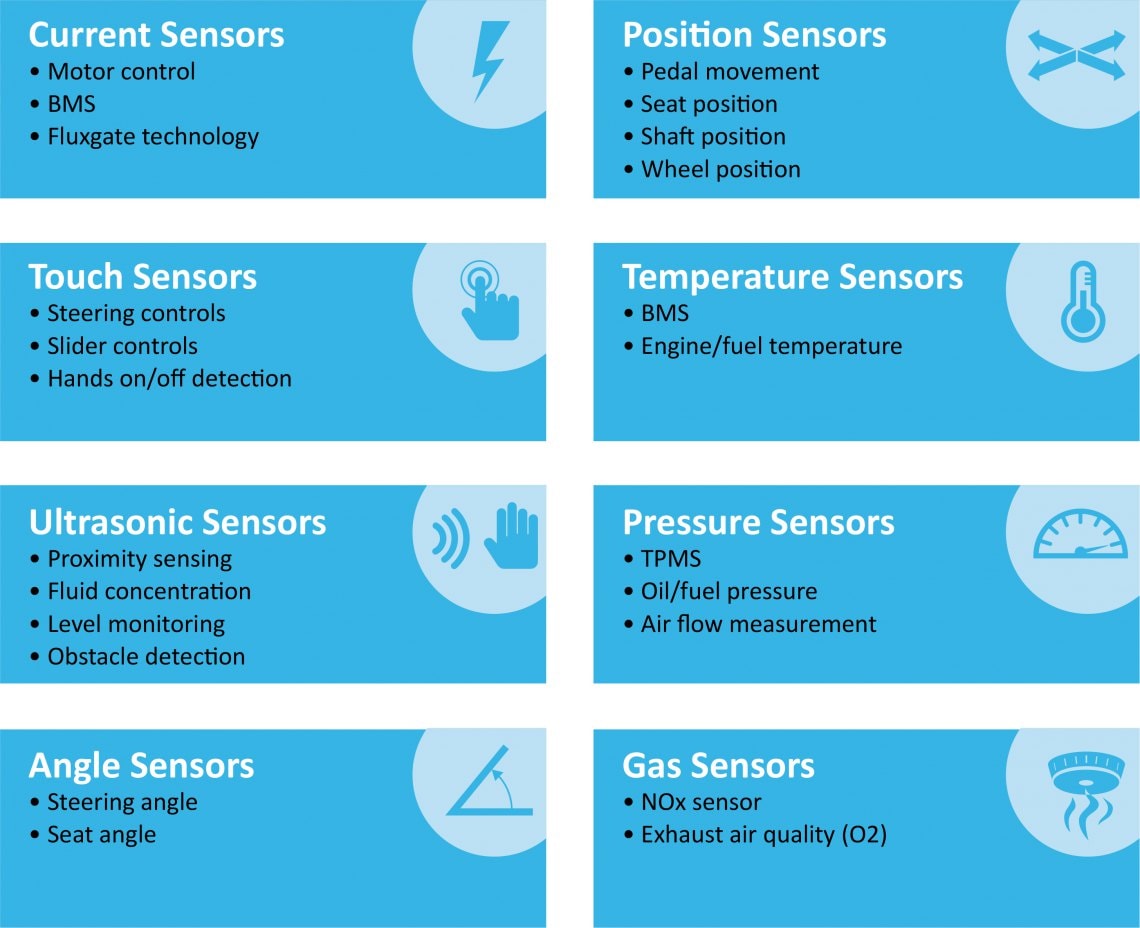
Enable Edge AI/ML Inferencing for Sensing Applications
Leverage our high-performance DSP engine with hardware Floating-Point Unit (FPU), tightly coupled peripherals and optimized ML DSP routines to achieve on-device low latency inferencing and enable faster, smarter decision-making without relying on the cloud.
Our easy-to-use MPLAB® Machine Learning Development Suite allows you to build efficient ML models based on raw sensor data and deploy them seamlessly to dsPIC33 DSCs, simplifying your intelligent sensing design journey.

Model-Based Designs With dsPIC33 DSCs
Simplify your embedded design with the MATLAB® Simulink®, open-source Scilab tools and our MPLAB® Device Blocks for Simulink that provide a Model-Based Design (MDB) platform.
Documentation
Application Notes
Reference Manuals
Supporting Collateral
Tools and Software
- Demo & Evaluation Boards
- Development Environment
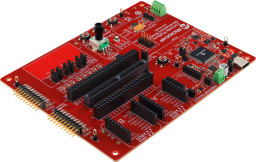
The Curiosity Platform Development Board (EV74H48A) is a full-featured development and demonstration platform enabling customers to explore the capabilities of the dsPIC33A Digital Signal Controller (DSC) family and also the PIC32A MCU family. The board operation requires the insertion of a 120-pin General Purpose Dual In-Line Module (DIM) containing a dsPIC33A DSC device or a PIC32A MCU device.
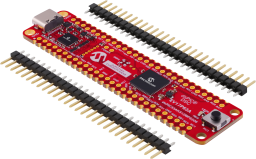
This cost-effective board facilitates easy evaluation and adoption of 32-bit dsPIC33A Digital Signal Controllers. It features the high-performance dsPIC33AK512MPS506 DSC with 200 MHz 32-bit CPU, DP-FPU, up to 40 Msps 12-bit Analog-to-Digital Converters (ADCs and several high-performance analog and digital peripherals).
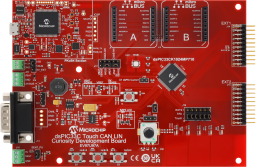
This board simplifies the evaluation of capacitive touch sensing using the dsPIC33C DSCs with core-independent touch capability or the device’s usage in automotive and industrial applications requiring CAN-FD, LIN or SENT communication. This board has on-board touch buttons, CAN/CAN FD, LIN and SENT transceivers, along with XPLAINED PRO and mikroBUS™ connectors to interface touch and other extension boards
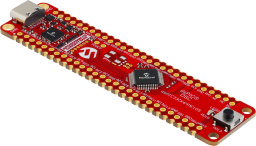
The dsPIC33CK64MC105 Curiosity Nano Evaluation Kit is a cost-effective hardware platform to evaluate the dsPIC33CK family of high-performance Digital Signal Controllers (DSCs). The board features the 100 MHz dsPIC33CK64MC105 DSC, which offers 64KB of ECC Flash, 8KB of RAM, a 12-bit/3.5 Msps ADC with 15 channels, 3 op amps, 1 analog comparator, a 12-bit DAC, 4x2 high-speed PWMs with 2 ns resolution and several Core Independent Peripherals (CIPs). The dsPIC33CK ‘MC1’ family is ideal for the design of automotive, motor control, sensor interfacing and control, high-performance, functional safety, and robust applications.
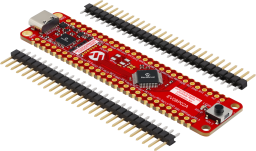
This Curiosity Nano evaluation kit provides an easy access to all features of the dsPIC33CK256MC005 DSC for rapid prototyping of your custom design.
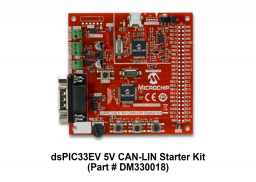
The dsPIC33EV 5V CAN-LIN starter Kit features the dsPIC33EV256GM106 Digital Signal Controller (DSC) for automotive and motor control applications.

MPLAB X IDE is a highly configurable software platform that provides powerful, free tools for developing, debugging and qualifying embedded designs that use microcontrollers and digital signal controllers.
MPLAB Code Configurator supports 8-bit, 16-bit and 32-bit PIC® microcontrollers. MCC is incorporated into both the downloadable MPLAB X Integrated Development Environment (IDE) and the cloud-based MPLAB Xpress IDE.
The MPLAB XC-DSC C/C++ Compiler is a full-featured, optimizing compiler that translates standard ANSI C programs into Digital Signal Controller (DSC) device assembly language sources. This compiler also supports many command-line options and language extensions that allow full access to the DSC device hardware capabilities and gives users fine control of the compiler code generator.

MPLAB Tools for VS Code are a set of extensions that integrate the MPLAB development ecosystem with VS Code, offering a seamless and efficient environment for developing designs based on Microchip devices.
Demos
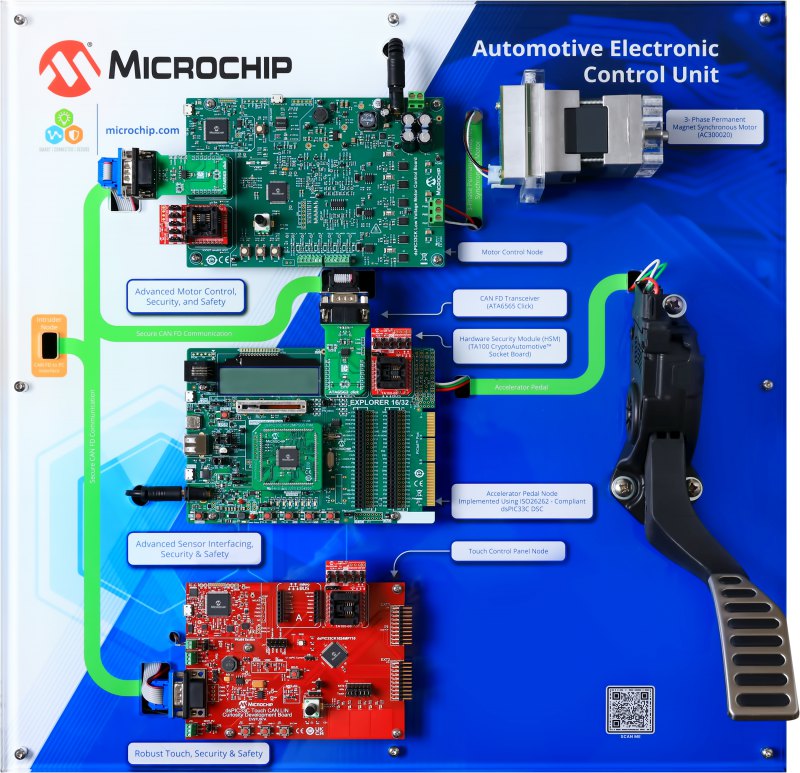
Automotive Electronic Control Unit (ECU) Demonstration Application
In this demonstration application, we showcase the usage of the high-performance dsPIC33C DSC combined with the TA100 CryptoAutomotive® security IC to meet the security and AUTOSAR® requirements for various ECU functions.
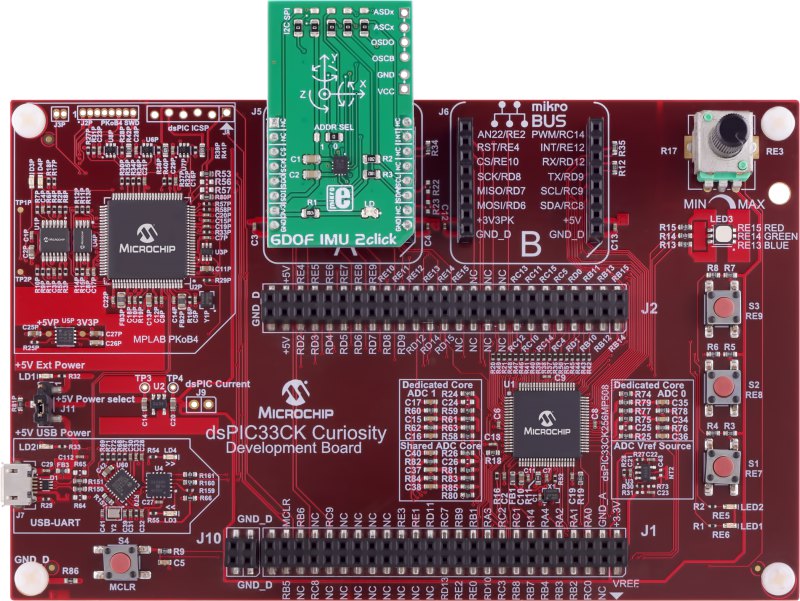
Machine-Learning-Based Gesture Recognition Demo
This demonstration application showcases machine learning-based gesture recognition with dsPIC33 DSCs.
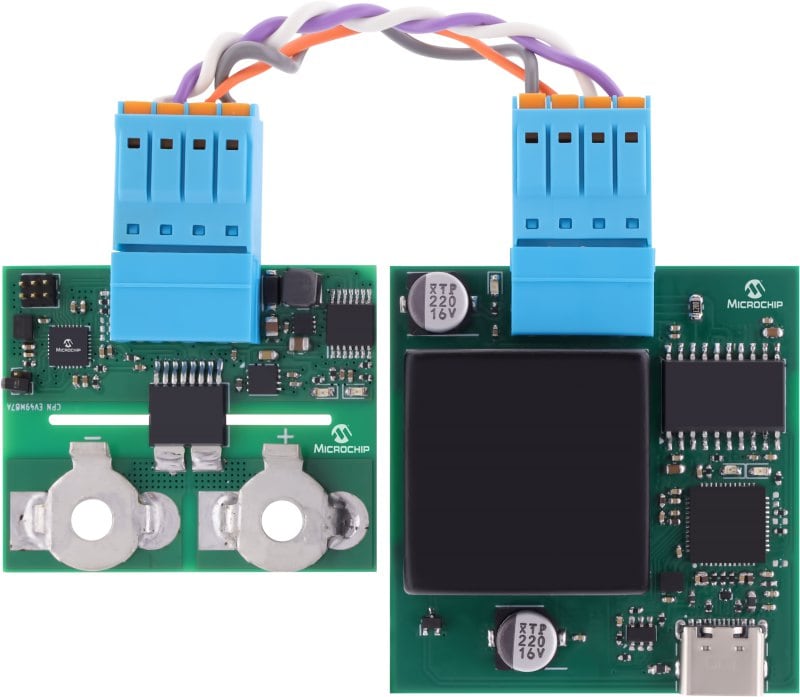
Machine Learning/AI-Based Arc Fault Detection (AFCI)
FAQs
What makes dsPIC33 Digital Signal Controllers (DSCs) suitable for real-time sensor interfacing and control applications?
What makes dsPIC33 Digital Signal Controllers (DSCs) suitable for real-time sensor interfacing and control applications?
dsPIC33 DSCs combine embedded control, DSP acceleration and integrated analog and peripheral functions to help designers acquire sensor data, process signals and close control loops in real time. This integration can reduce external components; simplify system design and support precise, responsive control in sensing, motor-control and digital-power applications.
What ADC sample rates do dsPIC33 DSCs offer for sensor signal acquisition?
What ADC sample rates do dsPIC33 DSCs offer for sensor signal acquisition?
Analog-to-Digital Converter (ADC) performance varies by family and device. Select dsPIC33C DSCs offer 12-bit ADCs up to 3.5 Msps, and select dsPIC33A DSCs offer 12-bit ADCs up to 40 Msps with a 16-bit oversampling mode. These integrated ADCs let designers place high-speed acquisition close to the sensor. Refer to the device data sheet to confirm ADC resolution and sample rate for a specific part number.
How does the DSP engine in a dsPIC33 DSC accelerate filtering and FFT processing?
How does the DSP engine in a dsPIC33 DSC accelerate filtering and FFT processing?
The Digital Signal Processing (DSP) engine performs single-cycle, multiply-accumulate operations and accelerates Finite Impulse Response (FIR) and Infinite Impulse Response (IIR) filtering, Fast Fourier Transform (FFT) processing and data-conversion functions using optimized DSP libraries. This helps designers process sensor signals with lower latency than executing the same math in general-purpose C code.
Which integrated analog peripherals in dsPIC33 DSCs can reduce external signal-conditioning components for motor control applications?
Which integrated analog peripherals in dsPIC33 DSCs can reduce external signal-conditioning components for motor control applications?
Integrated high-speed ADCs, op amps or Programmable Gain Amplifiers (PGAs), comparators, 12-bit Digital-to-Analog Converters (DACs) and bias or reference-generation features available on most of the dsPIC33 devices can reduce the need for external signal-conditioning components in motor control designs. These peripherals support current sensing, input conditioning, threshold detection, reference generation and sensor biasing on-chip. Features such as a buffered mid-supply output for op-amp biasing can reduce external divider circuitry on supported devices, helping save board space and Bill of Materials (BoM) cost.
Can dsPIC33 DSCs be used in digital power conversion applications?
Can dsPIC33 DSCs be used in digital power conversion applications?
dsPIC33 DSCs suit digital power conversion because they combine deterministic real-time control, DSP-accelerated math and an integrated analog front-end on a single device, which reduces external components and BoM. A single-cycle MAC DSP engine runs compensator math (2p2z or 3p3z) from Flash with zero wait states, supporting stable regulation at high switching frequencies. High-resolution Pulse-Width Modulation (PWM)—down to 250 ps on some of our dsPIC33C devices and 78 ps on most of our dsPIC33A DSCs—enables tight regulation across topologies such as AC-DC, DC-DC, Power Factor Correction (PFC), LLC and inverters. Integrated 12-bit ADCs (up to 3.5 Msps on dsPIC33C, up to 40 Msps on dsPIC33A), op amps or PGAs, comparators and DACs with slope compensation provide fast feedback and cycle-by-cycle protection. Supported devices also add functional safety and security features. Peripheral availability varies by device—refer to the data sheet for a specific part.