



Part Number:
Quantity:
Price per Unit (in USD):
Total Amt:
Log in to myMicrochip to access tools and benefits. Sign up in just one minute.
Maximize Your Experience: Reap the Personalized Advantages by Completing Your Profile to Its Fullest. Update Here
Stay in the loop with the latest from Microchip. Update your profile while you are at it. Update Here
Complete your profile to access more resources. Update Here
PolarFire® Mid-Range FPGAs
Lowest-Power, Cost-Optimized, Mid-Range FPGAs
PolarFire® FPGAs deliver award-winning performance with exceptional security, reliability and the lowest power consumption in their class. Spanning from 48K to 481K programmable Logic Elements (LEs), these mid-range devices include options with integrated 12.7 Gbps transceivers for high-speed serial connectivity in communications, imaging and embedded system applications.
Introducing PolarFire Core FPGAs
The PolarFire FPGA family now includes cost-optimized Core devices for applications that don’t require high-speed serial transceivers. These FPGAs offer up to 481K LEs with a wide range of logic densities, packaging options, fast I/O and configuration flexibility to meet diverse performance, power and cost requirements.
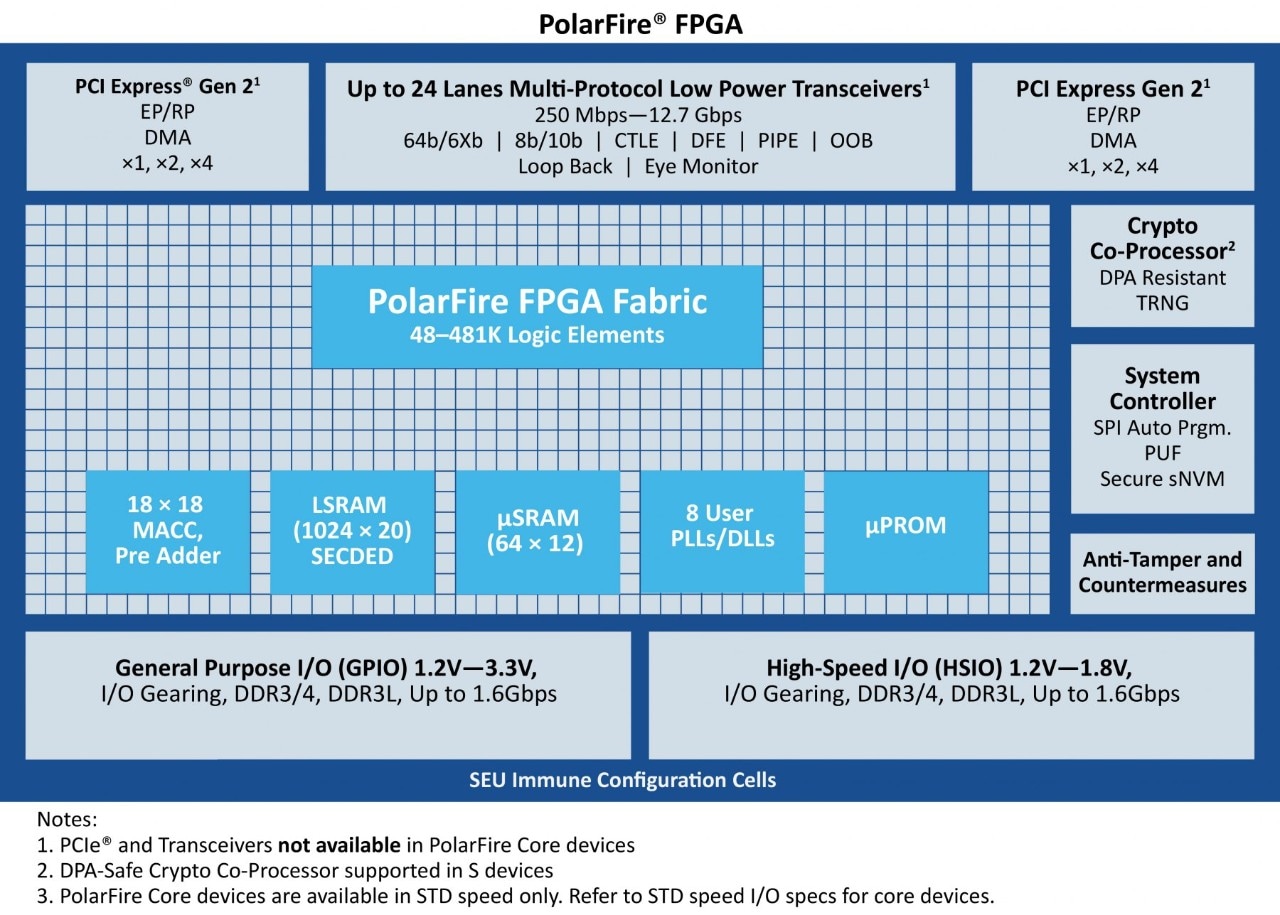
Cost-Optimized Architecture
- Architecture and process optimizations for 50K–500K LE devices
- Transceiver performance optimized for 12.7 Gbps, which yields smaller size
- PolarFire Core FPGA family offers same PolarFire FPGA features without the transceivers for cost-sensitive applications
- 1.6 Gbps I/Os supporting DDR4/DDR3/LPDDR3, LVDS-hardened I/O gearing logic with CDR (supports SGMII/GbE links on GPIOs)
- Best-in-class high-performance, hardened security IP in mid-range devices
- Small form factor 11 × 11 mm package option
Power Optimization
- Lowest power FPGAs: One-tenth (1/10) static power compared to competing devices
- Transceivers optimized for 12.7 Gbps, which yields half the power of competing devices
- Integrated hard IP: DDR PHY, PCIe® endpoint/root port, crypto processor
- Total power (static and dynamic): up to 50% lower power
- PolarFire Core FPGA family offers same PolarFire FPGA features without the transceivers for even lower-power options
- Product Table
- Product Selector Guide
Note:
- Devices in the same package and family type are pin compatible
- The FCSG325 package has dimensions of 11 × 11 for MPF050 and MPF100 devices and 11 × 14.5 for MPF200 devices
- PolarFire Core FPGA devices do not contain transceiver lanes or PCIe Gen 2 endpoints/root ports
PolarFire cost-optimized FPGAs deliver the lowest power at mid-range densities with 12.7 Gbps SerDes transceivers as well as best-in-class security and reliability. They offer unprecedented capabilities and value with 10G transceivers, advanced I/Os, security and DSP capabilities while maintaining all the advantages traditionally associated with nonvolatile FPGAs such as static power, security and single event upset (SEU) immunity. The devices are excellent for a wide range of applications within wireline access networks and cellular infrastructure, defense and commercial aviation markets, as well as industrial automation and IoT markets.
For details on specific military device offerings, please refer to the Product Overview.
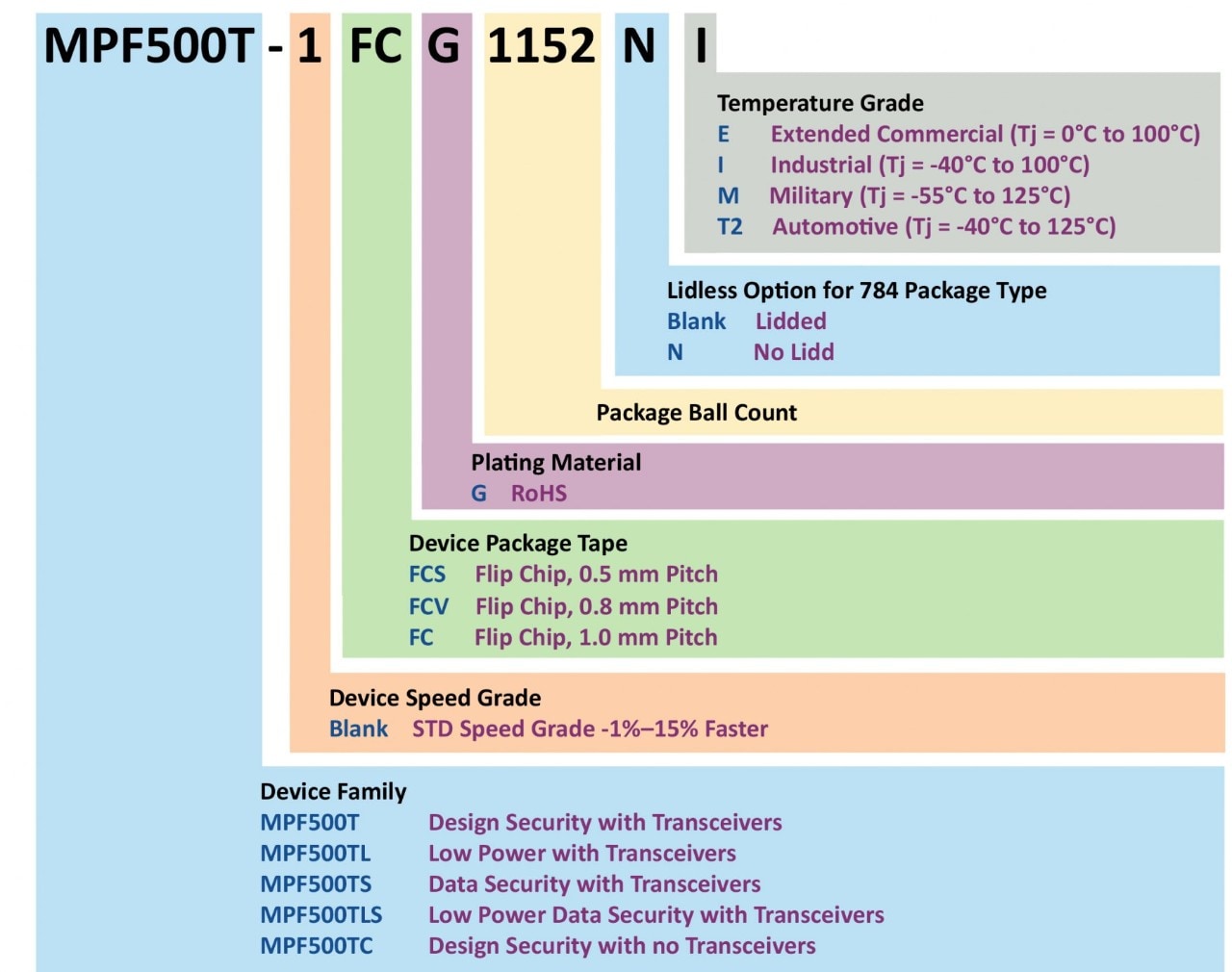
Design Tools

Libero® SoC Design Suite
This design suite enables high productivity with comprehensive, easy-to-learn and easy-to-adopt development tools for our power-efficient FPGAs.

SmartHLS™ Compiler
The SmartHLS compiler raises the abstraction level for faster design and easier verification of our FPGAs, SoC FPGAs and radiation-tolerant FPGAs.

IP Cores
Accelerate your time to market with our extensive suite of proven, optimized and easy-to-use IP cores for our FPGAs.

Mi-V Soft RISC-V® Core
The MIV_RV32 is a soft processor core designed to implement the RISC-V ISA. The core includes a JTAG interface to facilitate debug access. Three optional bus interfaces are available for peripheral and memory accesses: AHB, APB3, and AXI, which can be configured as AXI3 or AXI4.

VectorBlox™ Accelerator SDK
With support for popular AI models and frameworks, VectorBlox accelerator SDK simplifies AI inferencing on PolarFire FPGAs, bridging the gap between software-centric AI development and hardware-optimized FPGA deployment.
Kits and Hardware
- PolarFire FPGA Kits
- Programmers and Adapters
- Third-Party Kits
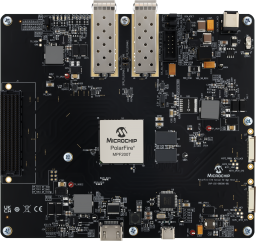
The PolarFire® Ethernet Sensor Bridge is a low-latency sensor-bridging solution for NVIDIA® Jetson™ AGX Orin™ and IGX platforms, enabling scalable multi-sensor connectivity for edge AI, vision, robotics, and healthcare applications using PolarFire® FPGAs.
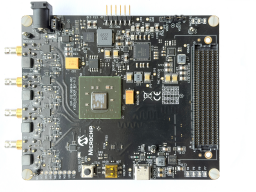
The quad-channel PolarFire CXP-12 Kit features an SLVS-EC™-to-CoaXPress bridge for connecting high-speed image sensors to vision systems. It enables reliable, low-latency, high-resolution imaging over long-distance coaxial links for industrial vision and imaging applications.
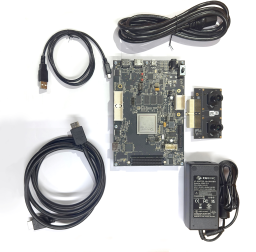
Evaluate 4K image processing and rendering using dual camera sensors, numerous display interfaces and popular imaging and video protocols including MIPI CSI-2 TX, MIPI CSI-2 RX, HDMI 1.4 TX, HDMI 2.0, DSI and HD/3G SDI.
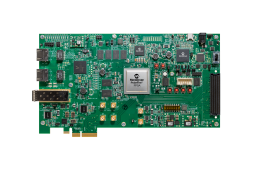
Microchip's PolarFire Evaluation Kit offers high-performance evaluation across a broad class of applications. This kit is ideally suited for high-speed transceiver evaluation, 10Gb Ethernet, IEEE1588, JESD204B, SyncE, CPRI, and more. The kit connections include a high pin count (HPC) FPGA mezzanine card (FMC), numerous SMAs, PCIe, dual Gigabit Ethernet RJ45, SFP+, and USB. A 300K logic element (LE) PolarFire FPGA with DDR4, DDR3, and SPI-flash allow a broad class of high-performance designs to be developed.
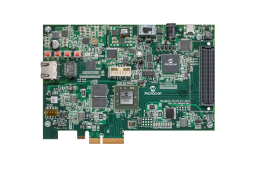
This kit enables general-purpose evaluation and development for the PolarFire FPGA. The kit includes Gigabit Ethernet RJ45, PCIe®, USB and LPC FMC connectors and a PolarFire 300K LE FPGA with onboard DDR4 and SPI Flash memory.

The PCIe root port adapter is a hardware evaluation platform for evaluating and testing PolarFire® FPGA PCIe root port capabilities, like the enumeration of an endpoint device and, low-speed and high-speed data transfers.
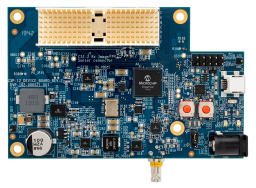
This FMC daughter card is a hardware evaluation platform for evaluating and testing the 12.5 Gbps CoaXPress protocol.
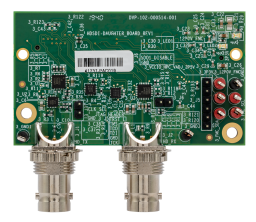
This FMC daughter card is a hardware evaluation platform for evaluating and testing the Serial Digital Interface (SDI) IP.
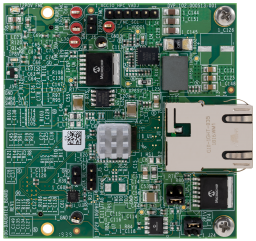
This FMC daughter card is a hardware evaluation platform for evaluating and testing the quadrate PHY IP.
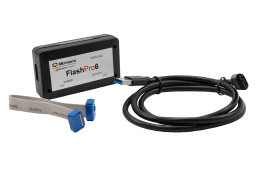
FlashPro6 offers exceptionally high performance through USB 3.0 that supports Serial Peripheral Interconnect (SPI) client and JTAG interfaces.
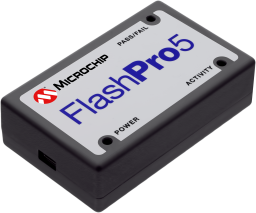
FlashPro5 offers high performance through USB 2.0 that supports Serial Peripheral Interconnect (SPI) and JTAG interfaces.
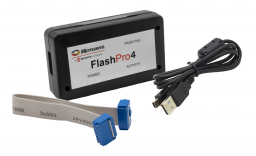
FlashPro4 is designed for JTAG programming of older Microchip FPGA families, including IGLOO, ProASIC3, SmartFusion, and Fusion. It is suitable for existing designs that do not require SPI Slave programming, advanced debugging, or high-speed programming
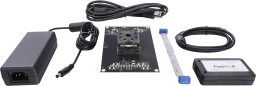
ChipPro is a quick and easy device programming solution for Microchip’s FPGA devices. The ChipPro programmer baseboard hosts a connector to plug in the FlashPro 6 , our newest programmer which supports Linux and Windows platforms, in conjunction with LiberoSoC, FlashPro Express, and SmartDebug software..
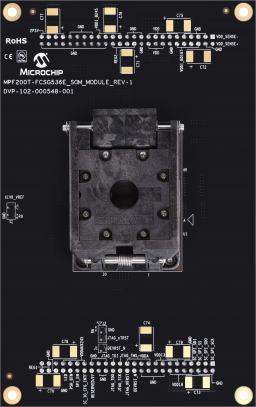
The CPSOM-MPF100T-FCSG325 is a System on Module (SoM) adapter card designed to plug into the ChipPro programmer baseboard (CP-PROG-BASE).
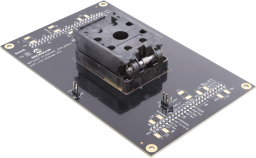
The CPSOM-MPF200T-FCSG536 is a System on Module (SoM) adapter card designed to plug into the ChipPro programmer baseboard (CP-PROG-BASE).
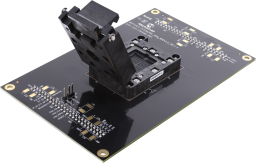
The CPSOM-MPF300T-FCG484 is a System on Module (SoM) adapter card designed to plug into the ChipPro programmer baseboard (CP-PROG-BASE).
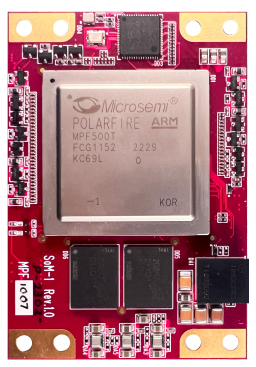
SoM1-MPF500T is a System on Module using the powerful, low power and high-security PolarFire FPGA from Microchip.

SOM2-MPF300T is a System on Module using the powerful, low power and high-security PolarFire FPGA from Microchip.

SoM3-MPF300T is a System On Module particularly suitable for high-security applications and where low power and small space is required.
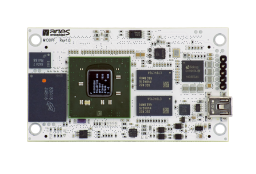
The M100PF SoM family spans from 100K logic elements (LEs) to 300K LEs, features 12.7G transceivers and offers up to 50% lower power than competing mid-range FPGAs.

