
Consistent and Predictable Audio Streaming Using PIC32CM JH Microcontrollers
Learn how the PIC32CM JH family of microcontrollers (MCUs)—based on the Arm® Cortex®-M0+ processor—use hardware-driven DMA, ADC and DAC pipelines to deliver real-time audio capture and playback with minimal CPU involvement. With a rich user interface running concurrently on the same device, this design demonstrates that the right peripheral architecture matters more than raw core performance.
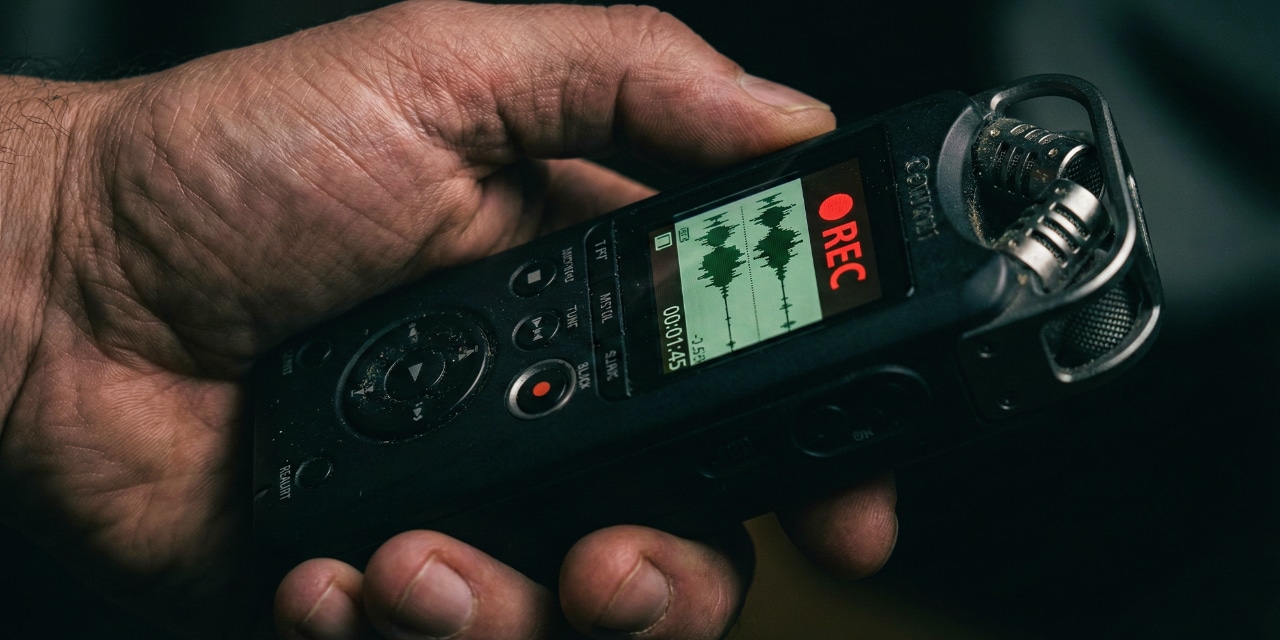
Audio has zero tolerance for errors. Drop a sample and your ear catches it immediately. Stall the pipeline for a few hundred microseconds and that glitch is already out the speaker, permanently. No retry. No buffer flush undoes it.
So, when audio enters a design, the usual move is to grab a bigger core.
But bigger cores cost more and pull more power. And with plenty of products, consumer appliances, industrial loggers, smart home devices, the bill of materials is locked in.
Which means the real question isn't which core is fast enough. It's how much of the job needs a core at all.
The PIC32CM JH family, built on the Arm® Cortex®-M0+, addresses this by shifting real-time audio handling away from the CPU and into hardware. By combining integrated ADC, DAC and DMA peripherals, the system creates a deterministic pipeline that maintains continuous audio capture and playback with minimal CPU load.
Why Determinism Matters in Audio
Real-time audio demands strict timing. Sampling must be continuous; playback must stay aligned with output rates and storage cannot interrupt the flow. At the same time, user inputs and UI updates must not interfere with the audio path.
This makes determinism essential. Relying on hardware timing rather than software execution, achieving that consistency becomes difficult when timing depends on CPU execution.
Moving Beyond CPU-Driven Designs
Traditional approaches struggle because they depend too heavily on the CPU. Polling loops introduce timing variation, interrupts add overhead and single-buffer designs leave no margin for delays.
The result is inconsistent performance, especially when SD card access or UI interaction competes for processing time. To remove this variability, the design shifts away from CPU-managed control and toward a hardware-driven pipeline.
A Hardware-Driven Audio Pipeline
The PIC32CM JH MCU reference design replaces CPU-managed streaming with a hardware-assisted pipeline. The MCU handles system control through a state machine, while peripherals manage continuous data movement.
Audio is captured through the ADC and played back via DAC. The DMA controller automatically transfers data between peripherals, buffers and the SD card, providing uninterrupted streaming.
Dual buffering for playback and triple buffering for recording provide enough margin to absorb timing variations. This keeps audio smooth even when storage latency fluctuates. This hardware-based approach only works if the data flow remains continuous under all conditions.
How the System Maintains Continuous Flow
The system operates through parallel processing rather than sequential execution. While DMA transfers one buffer, another is prepared in the background.
This decouples acquisition, storage and playback timing, preventing buffer underruns or overruns. Deterministic behavior comes from controlled data flow, not increased CPU speed. While the data path runs continuously, system behavior still needs to be controlled in a structured way.
Structured System Behavior
A state machine organizes operation into clear modes, including idle, recording, playback and file selection. Each mode controls behavior without disrupting the underlying data pipeline.
User inputs affect system state—not the real-time audio flow—delivering stability even during interaction. Once real-time processing is handled in hardware, it also changes how efficiently the system operates.
Power and Efficiency Benefits
By offloading data to DMA, the CPU remains idle for longer periods. Peripheral-driven transfers reduce power consumption while maintaining performance.
For portable or battery-powered systems, this approach improves efficiency without sacrificing audio quality. These efficiency and reliability improvements directly translate into real-world applications.
Where This Architecture Fits
This design approach is well suited for:
- Portable audio recorders
- Industrial voice logging
- Smart appliances with voice interfaces
- Embedded audio diagnostics
In each case, reliability and timing consistency are critical. Across these use cases, the underlying principle remains the same.
Key Takeaway
Deterministic audio systems are built through architecture, not processing power. By combining DMA-driven data movement, multi-buffer strategies and clear state control, the PIC32CM JH MCU reference design demonstrates how to achieve stable, real-time audio in embedded systems.
The result is a scalable, efficient solution where the CPU coordinates the system—but never limits it.
Frequently Asked Questions
Can this architecture scale to higher data rates?
Yes. Buffering and DMA extend to larger data streams with proper configuration.
Can it support formats beyond WAV?
Yes. File handling can be adapted with software changes.
Does DMA reduce system power consumption?
Yes. Reduced CPU activity lowers overall energy usage.
How does the system handle latency spikes?
Buffering absorbs delays, preventing disruption to sampling and playback.
Can the Cortex-M0+ really handle audio and a full UI at the same time?
Yes. Because the audio pipeline runs on DMA and hardware peripherals, the CPU is largely free. The OLED display, VU meter LEDs, RGB LED strip, touch inputs and potentiometer all run concurrently—this is the design’s proof that CPU headroom was preserved, not assumed.