




Part Number:
Quantity:
Price per Unit (in USD):
Total Amt:
Log in to myMicrochip to access tools and benefits. Sign up in just one minute.
Maximize Your Experience: Reap the Personalized Advantages by Completing Your Profile to Its Fullest. Update Here
Stay in the loop with the latest from Microchip. Update your profile while you are at it. Update Here
Complete your profile to access more resources. Update Here
PolarFire® SoC FPGAs
Lowest-Power, Cost-Optimized, Mid-Range FPGAs
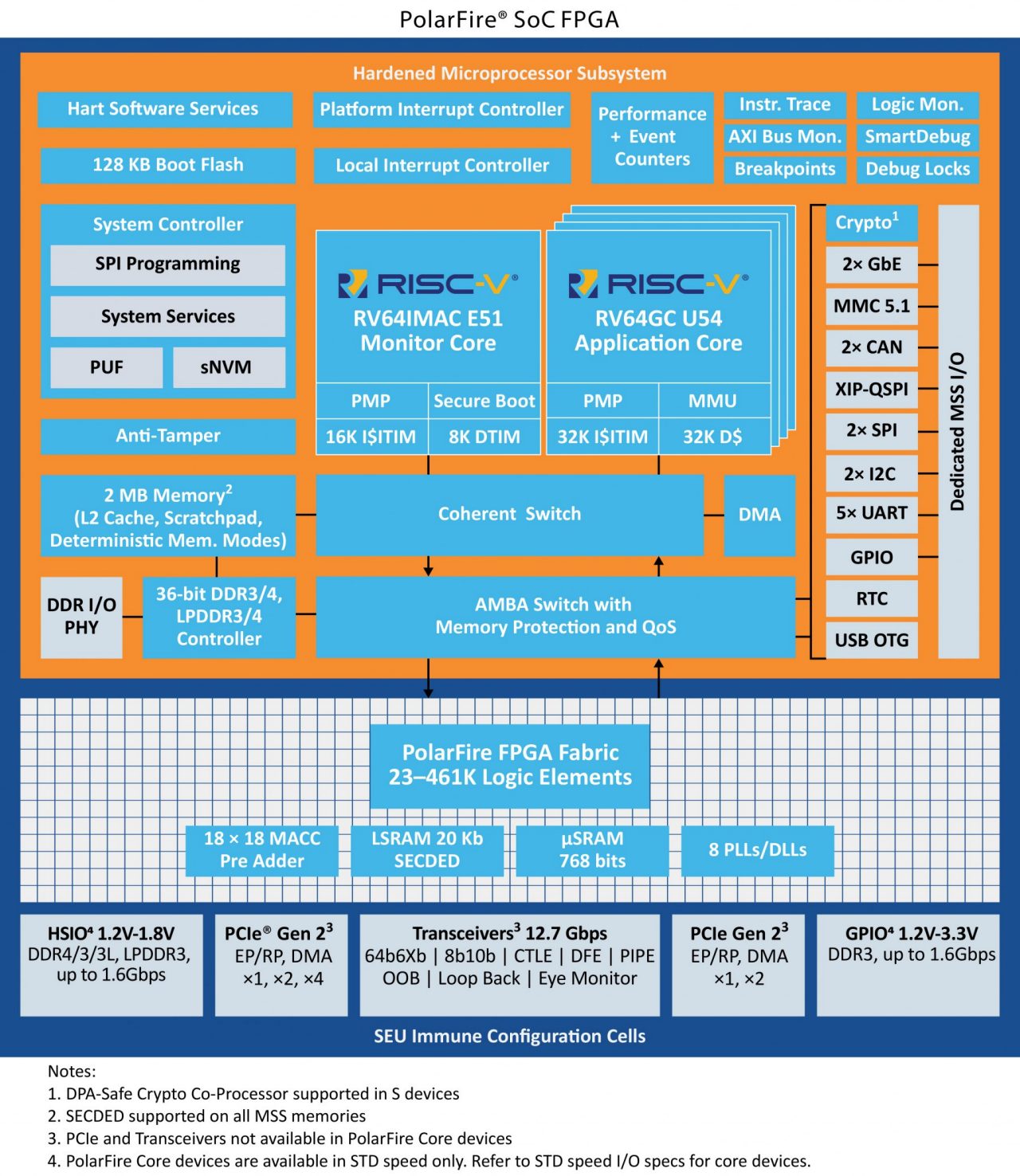
The PolarFire® SoC family delivers industry-leading power efficiency, excellent thermal performance and defense-grade security for intelligent, connected systems. Built around a deterministic, coherent RISC-V CPU cluster with deterministic L2 memory subsystem, this family of devices enables seamless development of Linux® and real-time applications.
The PolarFire SoC family now includes cost-optimized PolarFire Core SoC FPGAs devices for applications that don’t require high-speed serial transceivers. These new SoC FPGAs offer up to 460K logic elements and combine embedded RISC-V processing with a wide range of logic densities, packaging options, fast I/O and configuration flexibility to meet diverse performance, power and cost requirements.
Introducing PolarFire Core FPGAs
The PolarFire SoC family now includes cost-optimized PolarFire Core SoC FPGAs devices for applications that don’t require high-speed serial transceivers. These new SoC FPGAs offer up to 460K logic elements and combine embedded RISC-V processing with a wide range of logic densities, packaging options, fast I/O and configuration flexibility to meet diverse performance, power and cost requirements.
- Product Table
- Product Selector Guide
The PolarFire SoC FPGA family offers scalable, flexible solutions for power-efficient, real-time compute in a variety of applications. Devices span a range of logic densities and package options to support diverse system requirements. Our PolarFire Core SoC FPGAs are cost-optimized variants that do not include high-speed SerDes and PCIe® endpoint/root port capabilities.
Notes:
- L2 can be configured as cache or RAM. The minimum cache size is 128KB and max RAM size is 1920KB. This can be allocated in blocks of 128KB.
- 16-bit DDR data bus width for the FCSG325 package
- FCSG325 package dimensions for MPFS095T - 11 x 14.5, 0.5 mm
- These features are not available on the PolarFire Core SoC FPGA devices
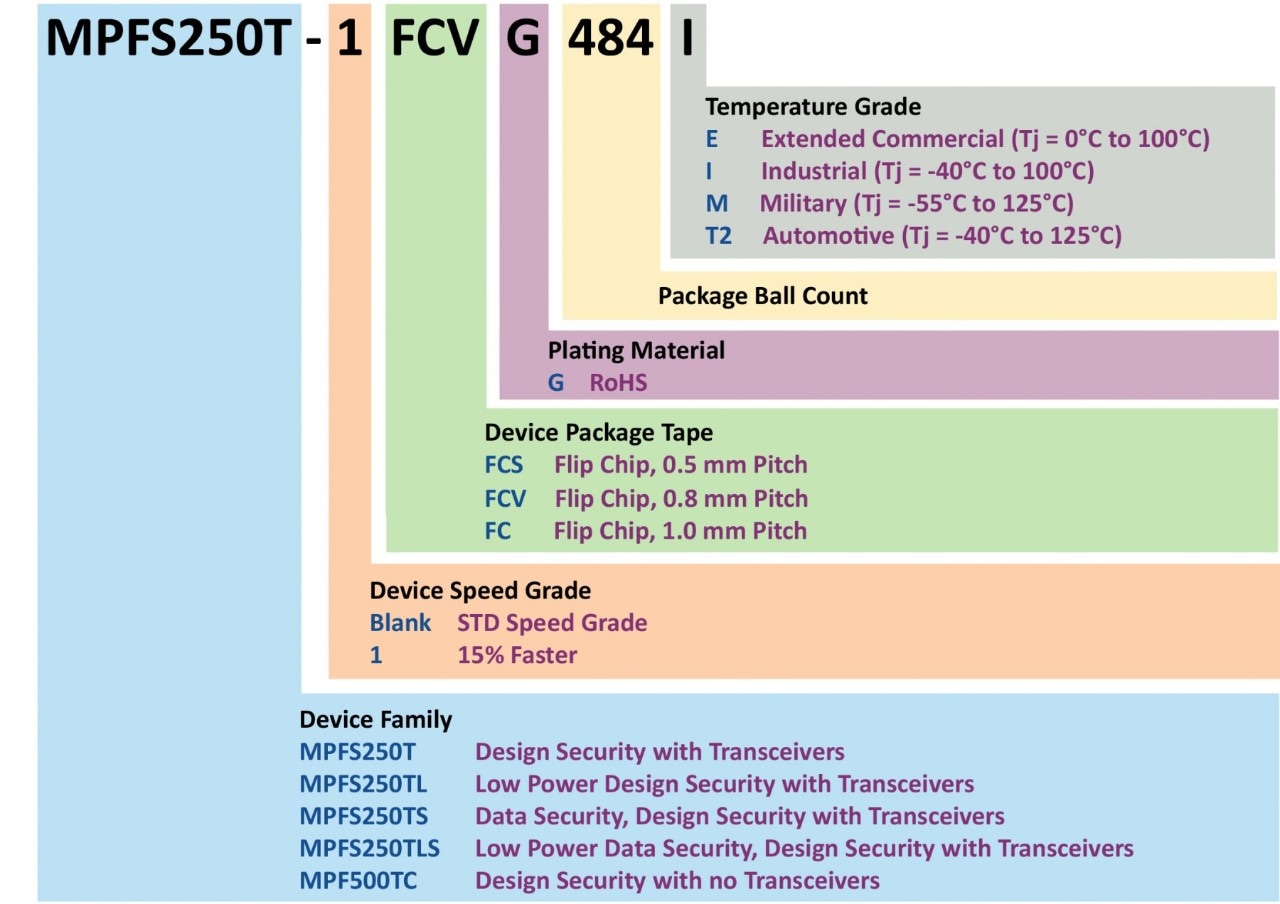
PolarFire SoCs are offered with multiple speed grades, temperatures, and package combinations. All temperatures are specified as junction temperatures. The following illustration shows the ordering information.
PolarFire SoC Solutions
Whether you're developing cutting-edge embedded systems, exploring RISC-V®-based architecture or building AI/ML applications, you can refer to this page for resources such tools, software frameworks, design examples and documentation that are available to you on GitHub
Tools and Software Frameworks on GitHub
PolarFire SoC Embedded Software
PolarFire SoCs combine a deterministic, coherent RISC-V CPU cluster with an L2 memory subsystem for real-time and Linux® applications. Explore comprehensive documentation, reference designs and development tools on GitHub to kick-start your development journey.
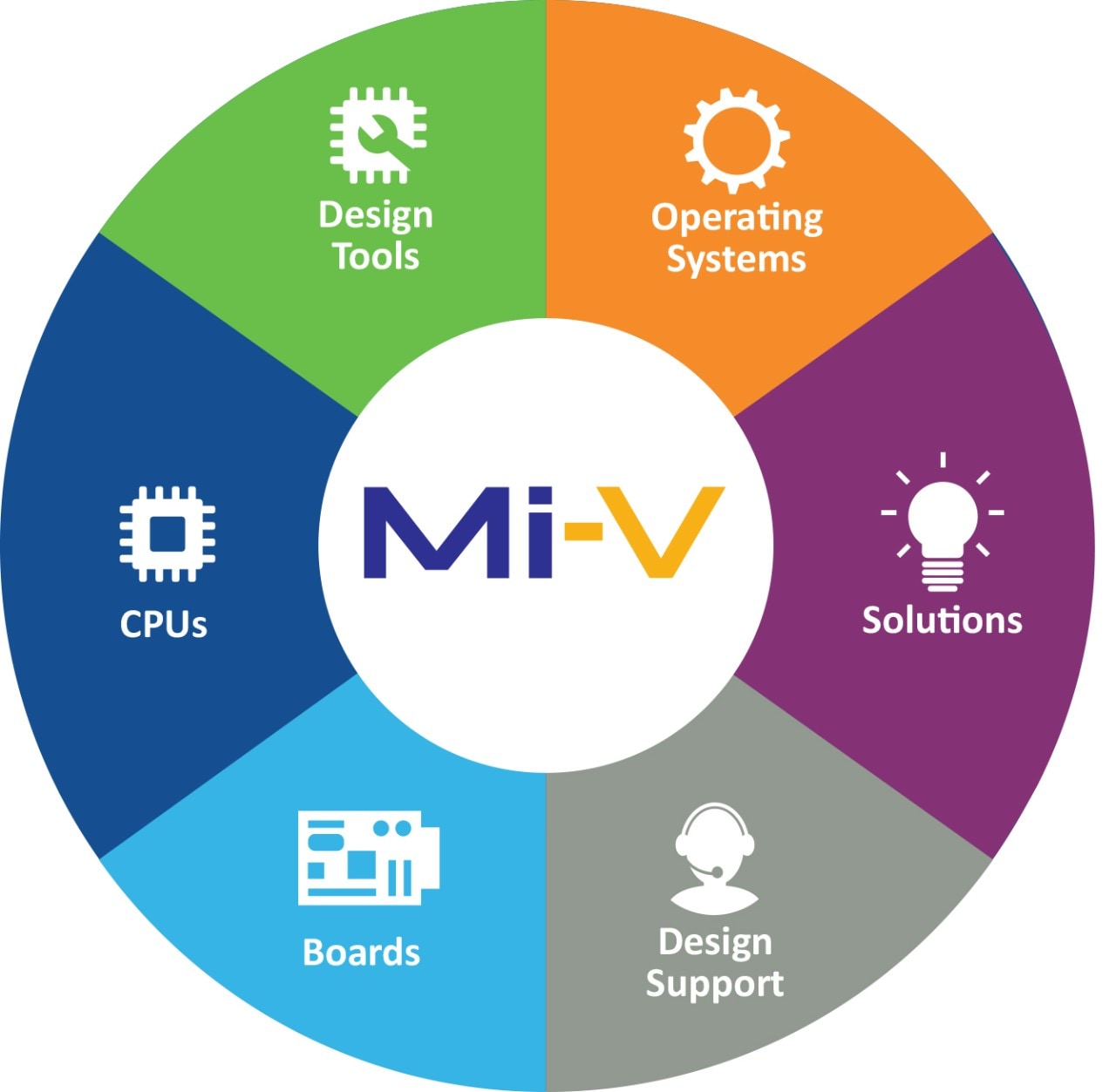
Mi-V/RISC-V Resources
Browse tools and IP cores for RISC-V soft CPUs on our FPGAs with support for Libero® SoC Design Suite and SoftConsole.
VectorBlox™ Software Development Kit (SDK)
VectorBlox SDK empowers AI/ML developers with tools for efficient Convolutional Neural Network (CNN) inference on PolarFire FPGAs and PolarFire SoC FPGAs. Access development tools, detailed documentation and practical examples on GitHub for your vision projects.
SmartHLS™ Compiler
SmartHLS compiler enables high-level synthesis for PolarFire FPGA and PolarFire SoC FPGA designs, allowing you to write in C++ and convert C++ code into optimized RTL. Get started with tools, examples and guides on GitHub.
Kits and Programming Hardware
- Microchip Evaluation Platforms
- Mi-V Ecosystem Platforms
- Programmers and Adapters
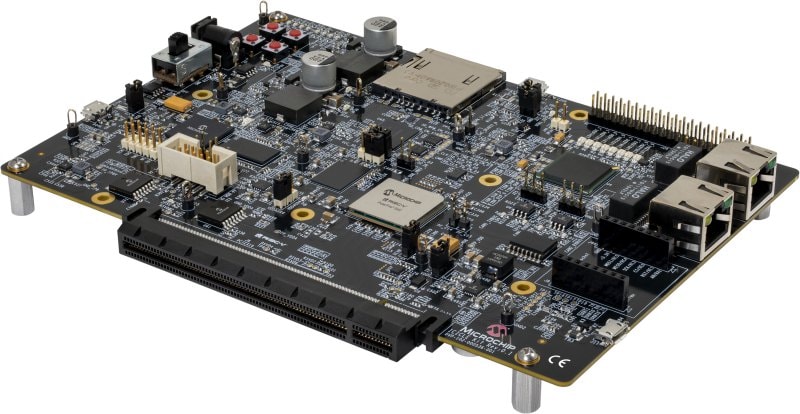
PolarFire® SoC Icicle Kit
General Purpose, Linux® Ready, PCIe®
- General-purpose PolarFire SoC platform for Linux and MPU + FPGA evaluation
- Full I/O and expansion, including PCIe Gen 2 x4 and rich peripheral set
- Starter kit suitable for serious development, reference designs and system initial setup
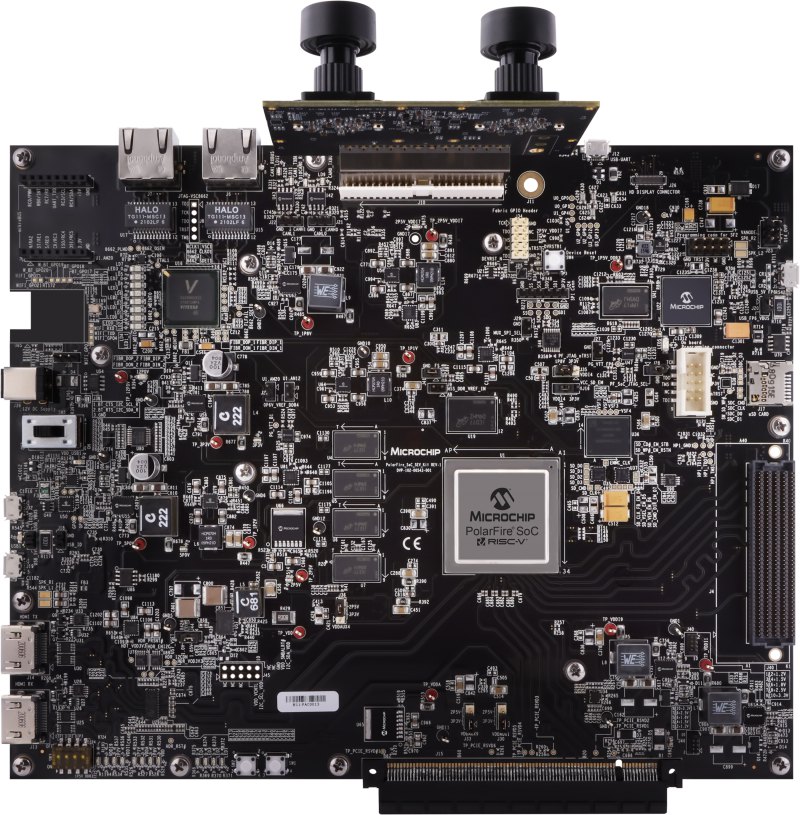
PolarFire SoC Video Kit
Vision and Video,AI/ML, Cameras, HDMI®
- Purpose-built for vision and video workloads
- Native video interfaces: dual MIPI CSI-2® cameras and HDMI 2.0 in/out
- Well suited for edge AI, imaging and video pipelines using PolarFire SoC fabric acceleration
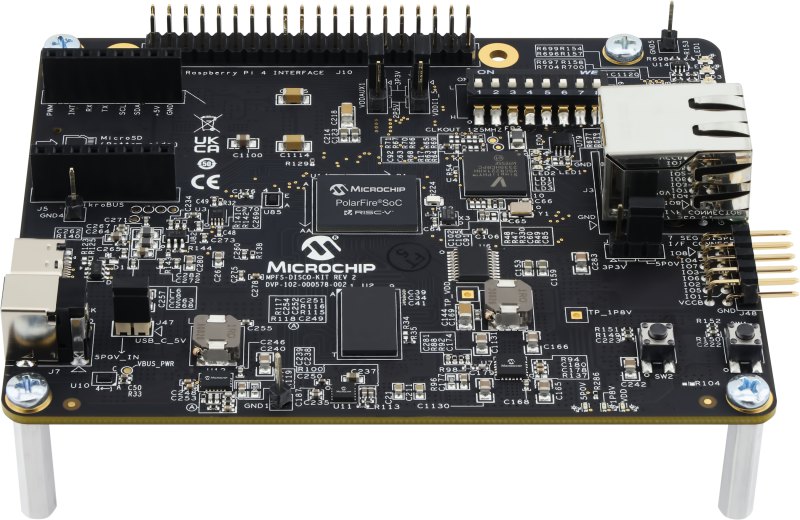
PolarFire® SoC Discovery Kit
Low Cost, Compact, Learning and Prototyping
- Lowest-cost entry point into PolarFire SoC and RISC‑V® development
- Smaller FPGA and no PCIe, optimized for affordability and size
- Great for learning, software initial setup and quick prototypes
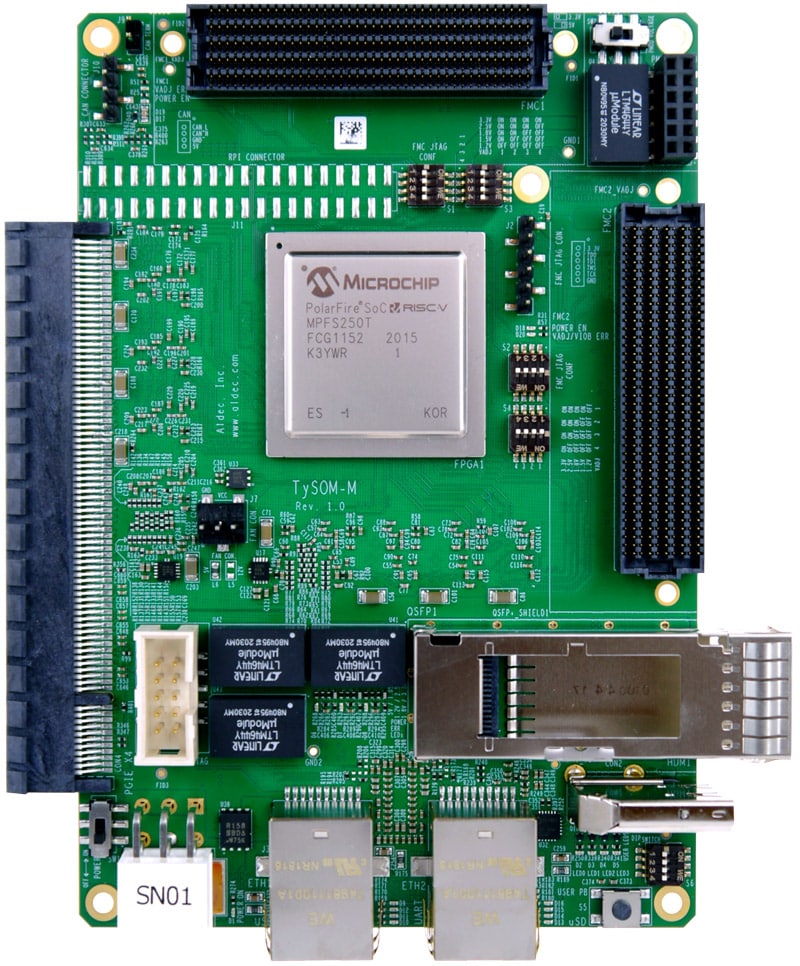
Aldec TySOM-M
- PolarFire SoC FPGA prototyping and development board
- Suitable for embedded compute, AI/ML and system validation
- Rich peripherals with FMC expansion and PCIe support
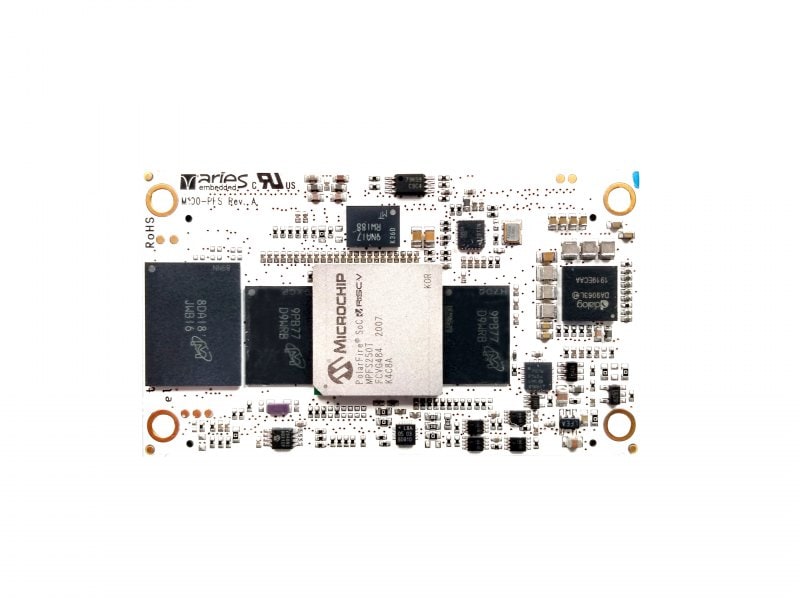
Aries Embedded SoM
- Low-power PolarFire SoC module with RISC‑V
- Suitable for embedded vision, industrial and IoT systems
- Designed for compact, scalable system integration
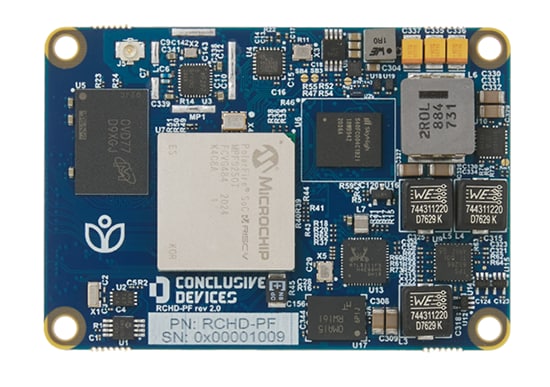
Conclusive Engineering SoM
- Compact PolarFire SoC system-on-module
- Suitable for edge compute, AI and industrial designs
- Production-ready platform for rapid deployment
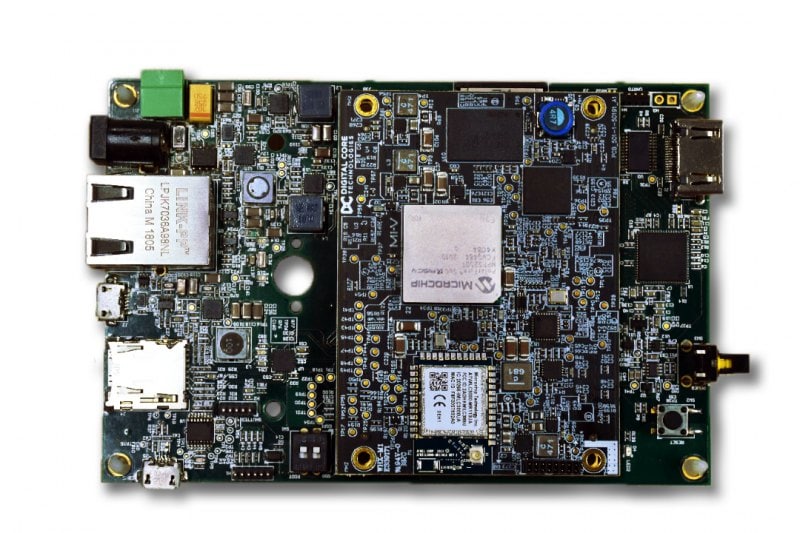
Digital Core SoM
- PolarFire SoC-based embedded compute module
- Suitable for high-performance and custom FPGA designs
- Flexible architecture for carrier-based systems
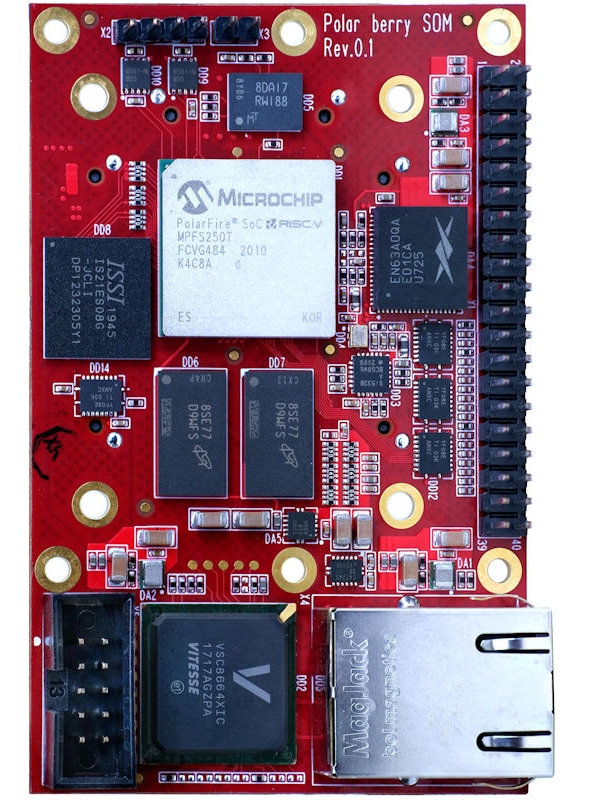
Sundance PolarBerry System-on-Module (SoM)
- Low-power RISC‑V SoC FPGA module
- Suitable for secure, edge and industrial designs
- Compact SoM with Raspberry Pi® I/O, Ethernet, DDR
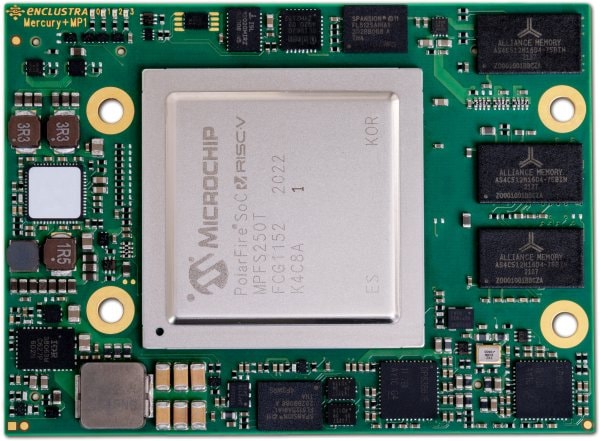
Enclustra® Mercury SoM
- Compact PolarFire SoC FPGA module
- Suitable for high-performance embedded and real-time systems
- High-bandwidth memory and rich I/O for scalable designs
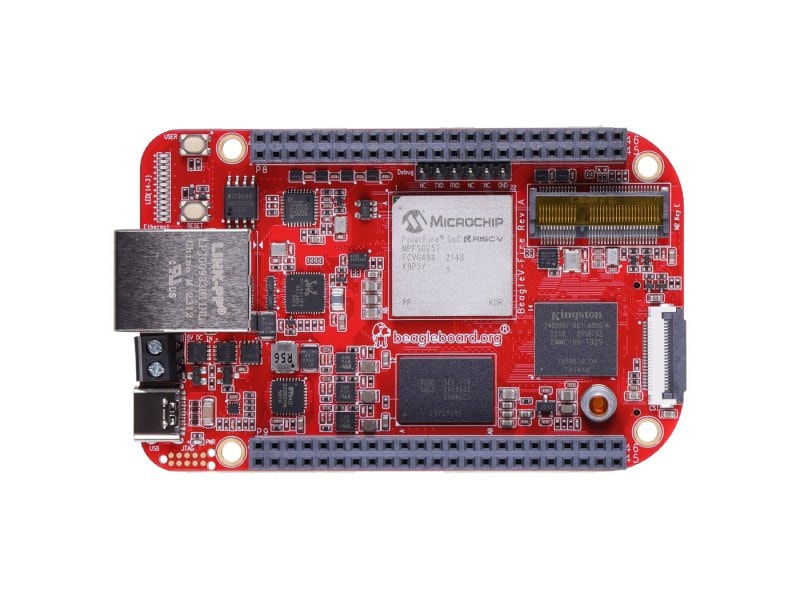
BeagleV®-Fire
- RISC‑V SoC FPGA single-board computer
- Suitable for embedded development, AI/IoT and prototyping
- Rich I/O with Ethernet, USB‑C®, DDR and expansion headers
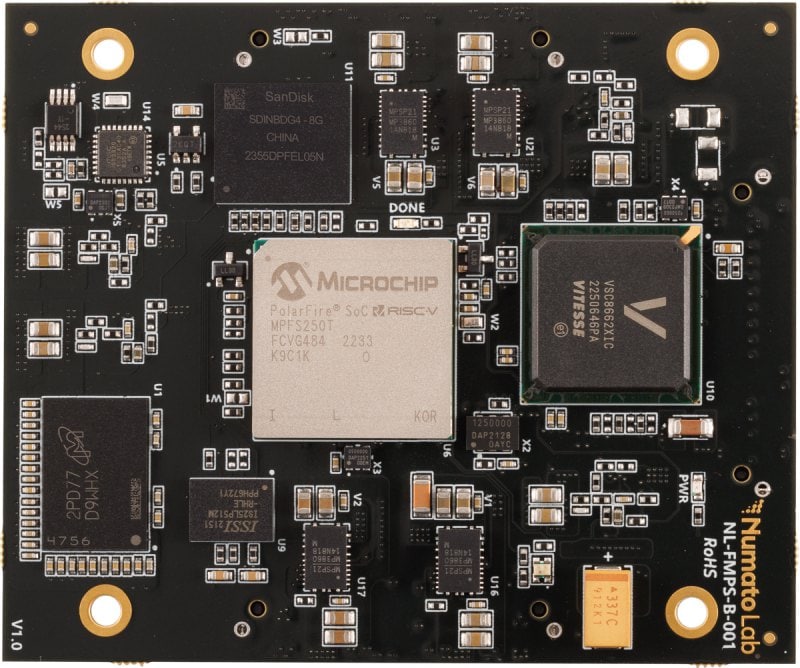
Numato Lab® EagleCore
- High-performance PolarFire SoC FPGA module
- Suitable for AI, vision and compute-intensive embedded systems
- Integrated memory, Ethernet and high-speed I/O for expansion
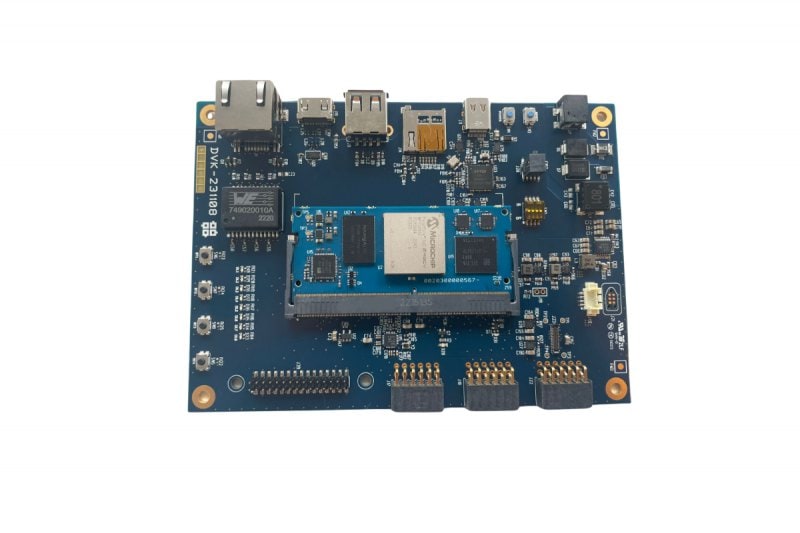
Enktron KYNESIS SoM
- PolarFire SoC-based SoM platform
- Suitable for custom embedded and application-specific designs
- Supports flexible carrier-based system development
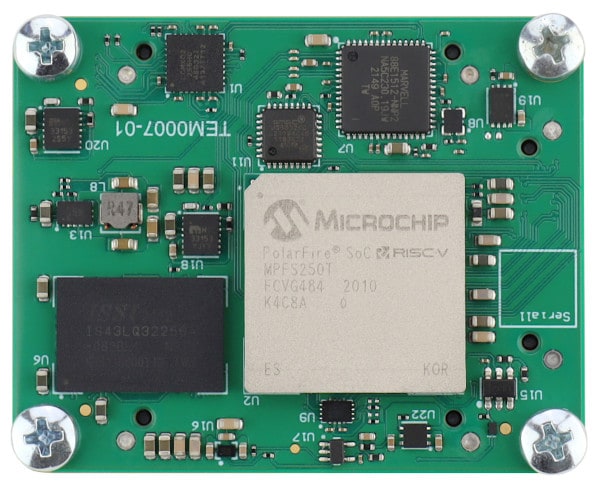
Trenz Electronic TEM0007 SoM
- Compact PolarFire FPGA-based SoM
- Suitable for space-constrained embedded designs
- Optimized for carrier-board integration
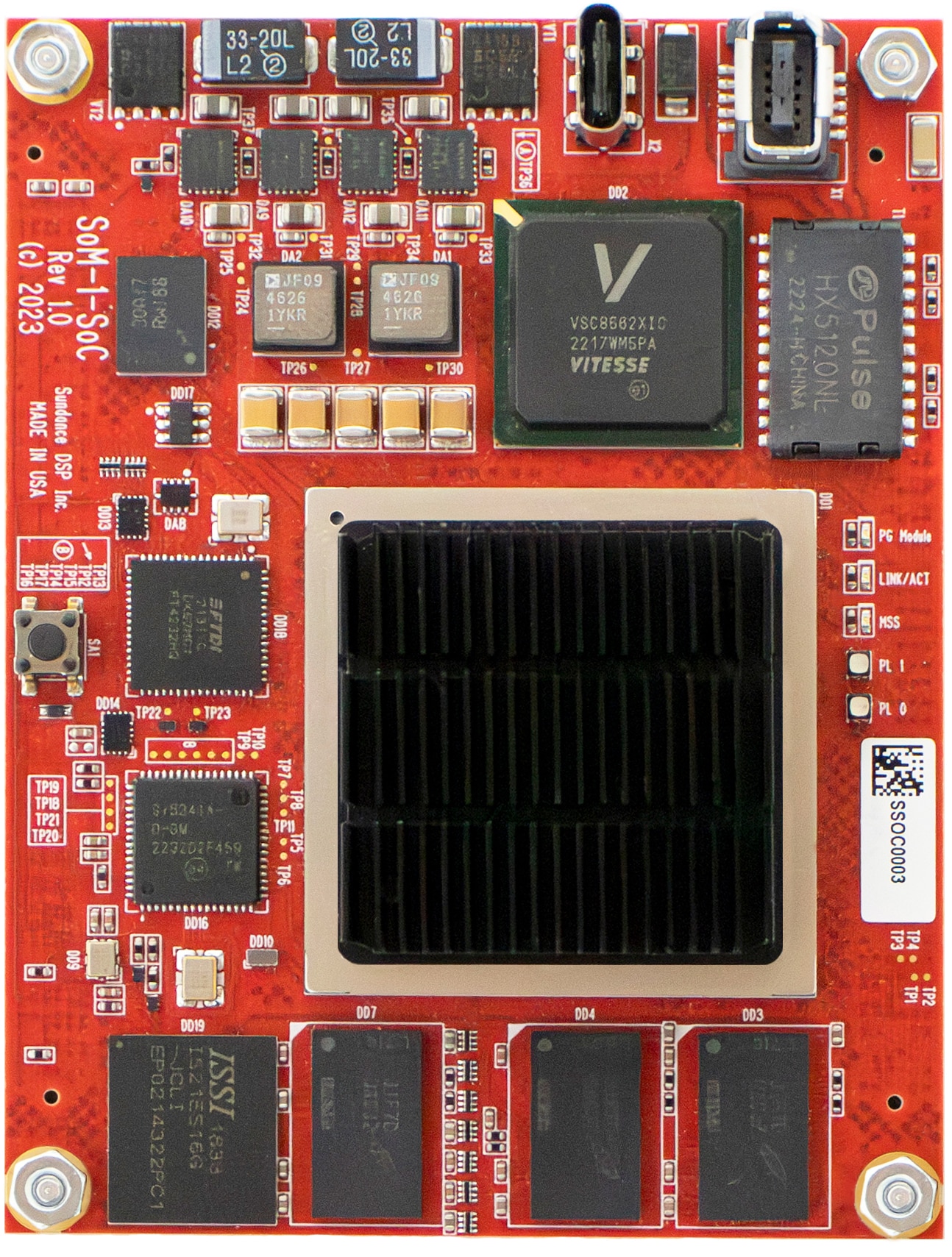
Sundance SoM1‑SoC
- Feature-rich PolarFire SoC module with RISC‑V
- Suitable for industrial, vision and secure embedded systems
- High-bandwidth memory and scalable connectivity
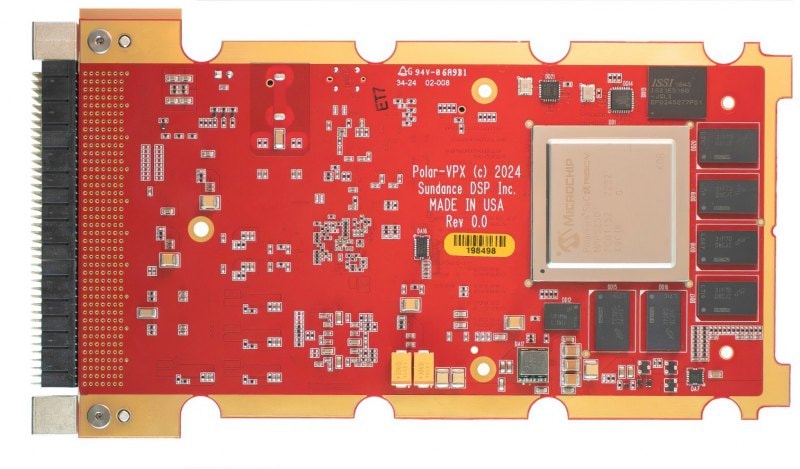
Sundance Polar-VPX
- 3U VPX-form PolarFire SoC FPGA platform
- Suitable for defense, aerospace, and rugged compute systems
- Supports high-speed data and modular VPX architectures
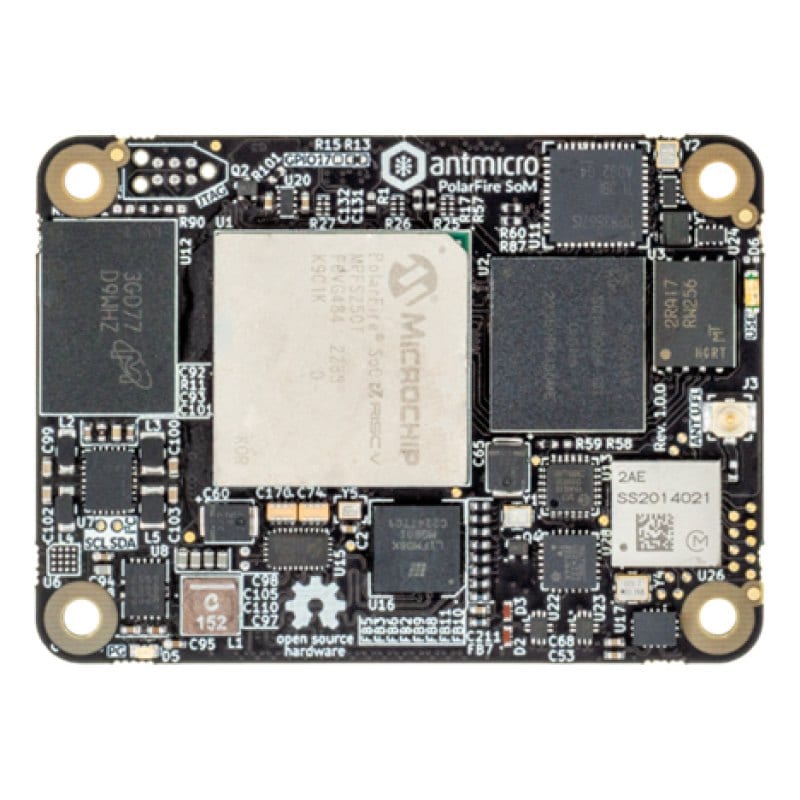
Antmicro Open-Source PolarFire SoC SoM
- Open-source PolarFire SoC module (CM4-compatible)
- Suitable for customizable embedded and edge AI systems
- Simplifies design with integrated memory, I/O and power
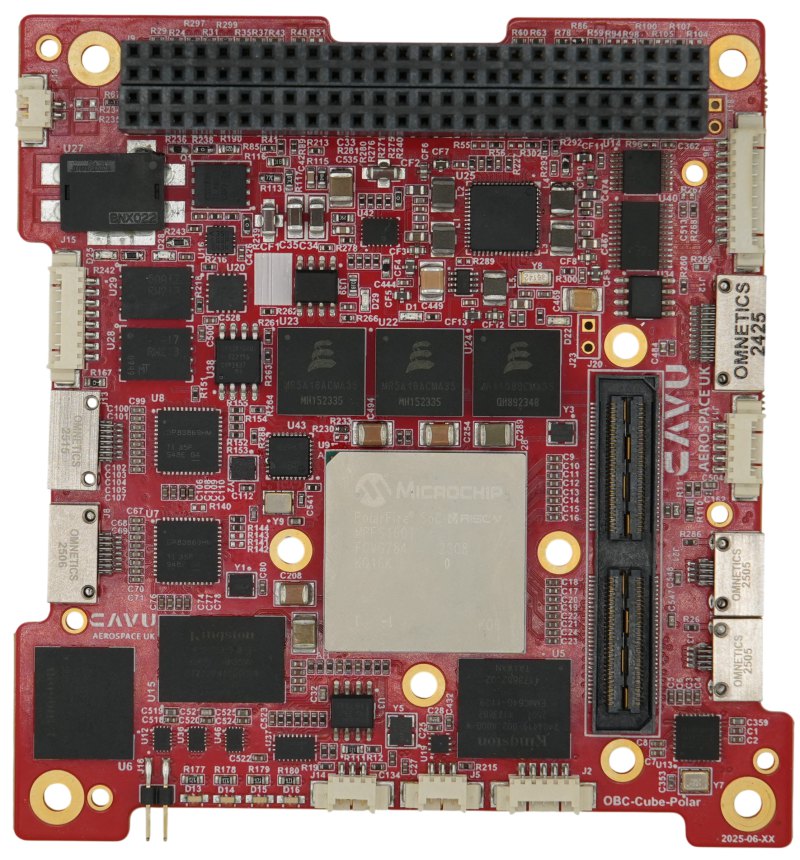
OBC–Cube-Polar
- Radiation-tolerant PolarFire SoC onboard computer
- Suitable for CubeSat and space-mission applications
- High-reliability design with ECC memory and robust interfaces
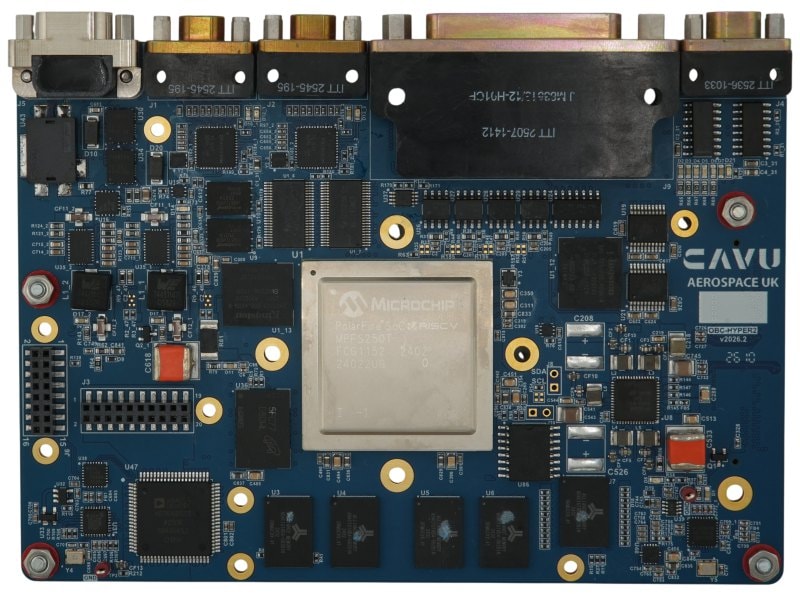
OBC-Hyper-Polar
- Advanced PolarFire® SoC + AI edge computing platform
- Suitable for high-performance space and autonomous systems
- Designed for scalable compute with AI acceleration capabilities
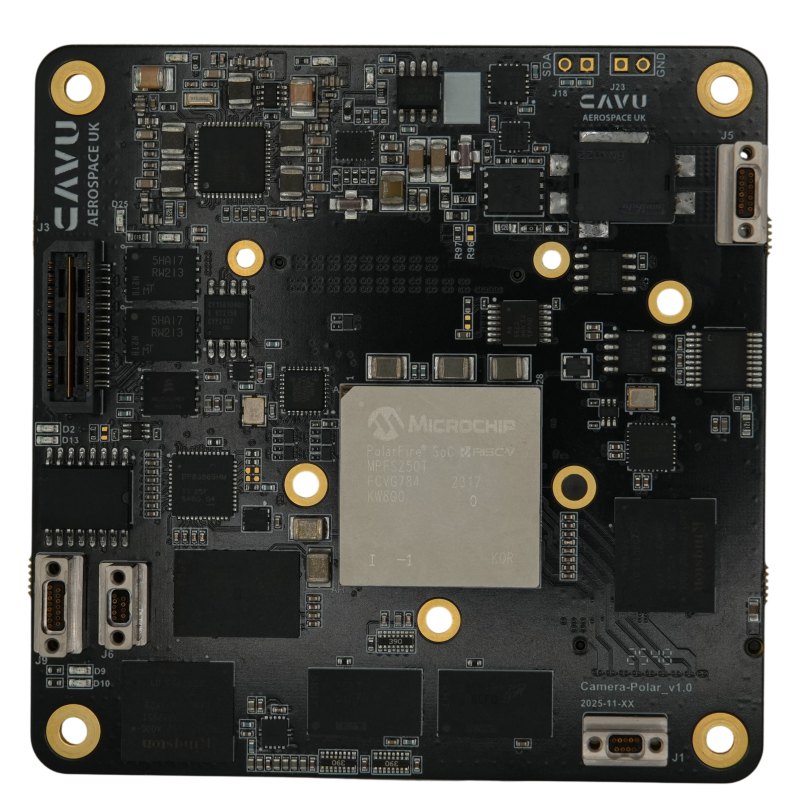
Video Recorder
- PolarFire SoC-based video processing platform
- Suitable for high-speed capture and real-time video analytics
- Optimized for imaging pipelines and frame grabber use cases
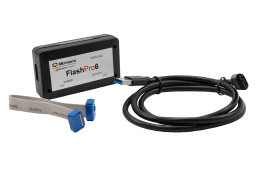
FlashPro6 offers exceptionally high performance through USB 3.0 that supports Serial Peripheral Interconnect (SPI) client and JTAG interfaces.
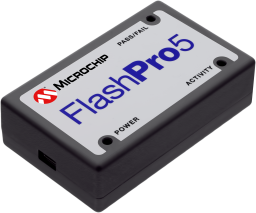
FlashPro5 offers high performance through USB 2.0 that supports Serial Peripheral Interconnect (SPI) and JTAG interfaces.
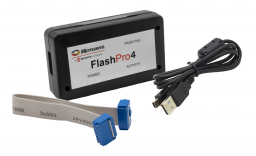
FlashPro4 is designed for JTAG programming of older Microchip FPGA families, including IGLOO, ProASIC3, SmartFusion, and Fusion. It is suitable for existing designs that do not require SPI Slave programming, advanced debugging, or high-speed programming
Design Tools
PolarFire SoC (MSS) Configurator
The PolarFire SoC Microprocessor Subsystem (MSS) configurator is a software tool to configure the PolarFire SoC microprocessor subsystem.
Libero® SoC Design Suite
Libero SoC Design Suite offers high productivity with its comprehensive, easy-to-learn, easy-to-adopt development tools for designing with our FPGA device families.
SoftConsole
SoftConsole is a software development environment for the rapid development of bare metal- and RTOS-based C/C++ software.
PolarFire SoC FPGA Videos
PolarFire SoC GitHub Introduction
This video provides an overview of key repositories, tools and documentation in GitHub to help you get started.
Debugging a Bare Metal Application
Learn to run and debug a bare metal app on the Icicle Kit using MMUART ports.
Creating a Bare Metal App for LIM
Configure the core, adjust memory and integrate with HSS for smooth operation.
Running Bare Metal Apps From DDR
Build HSS, program eMMC and boot a bare metal app from DDR memory.
Building a Linux Image With Yocto and Controlling GPIOs
Create a custom Linux image, control GPIOs and interact with LEDs.
How Bare Metal Applications Access the FPGA Fabric
Build, debug and program a bare metal app for FPGA fabric using key tools.
GPIOs, UIO Drivers and Yocto SDK
Use drivers to build custom Linux® distributions and control MSS GPIOs and fabric LSRAM.
Generating a Design and Adding Custom IP
Learn how to create a design in Libero® SoC Design Suite, integrate APB interface-based IP and use SDIO registers.
Linux: Connecting a PCIe Endpoint
Set up and access a PCIe NVMe™ drive from Linux® on the Icicle Kit.
Bare Metal Interrupts
Use MPFS GPIO and UART examples to handle interrupts in a bare metal application.
Debugging With Smart Debug
Learn Smart Debug features for FPGA and SoC debugging, including live probes and memory views.
Adding Packages to Yocto
Add and program custom packages to a Yocto image for testing on the Icicle Kit.
Technical Support
Visit our technical support portal If you need assistance with your PolarFire SoC FPGA-based design.
GitHub Discussions
Try our discussions forum on our GitHub page. Browse the available database of questions and answers, post your questions and support others in the discussions.