Reliable, Fast-Acting Protection for High-Voltage DC Data Center Architectures
UPS System Architecture
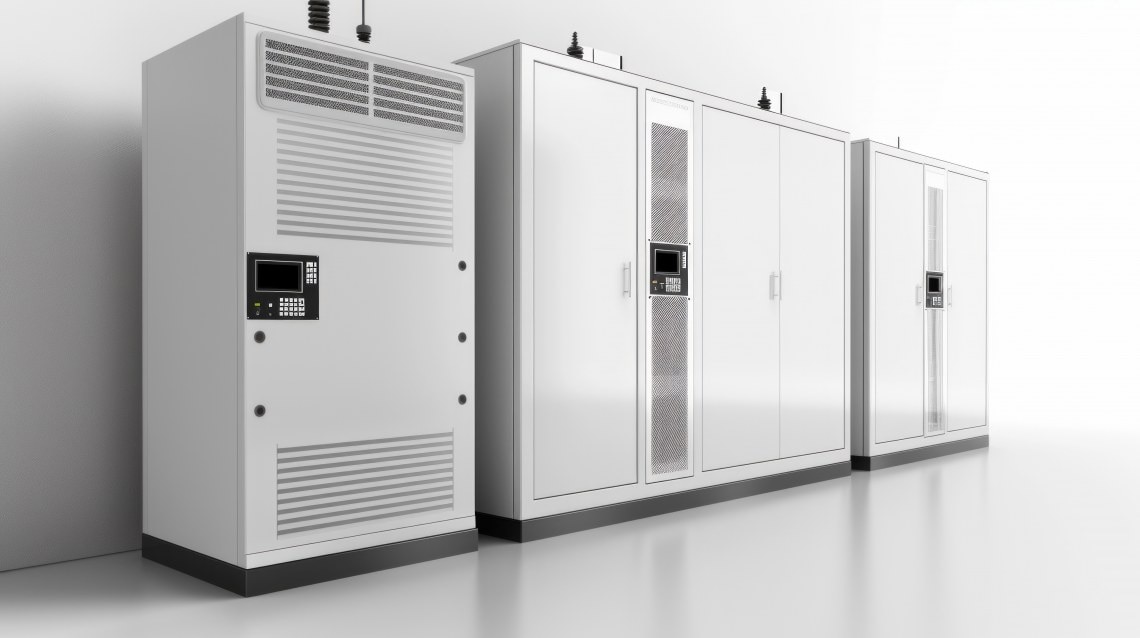
Modern UPS systems enable continuous power delivery by bridging the transition between grid supply and backup energy sources. These systems typically include front-end AC-DC conversion, energy storage through batteries or Battery Backup Units (BBUs), and downstream DC or AC distribution to critical loads. As data centers evolve toward high-voltage DC architectures, UPS systems are increasingly integrated into the broader power chain, supporting 400V and 800V DC distribution and reducing the number of conversion stages required for efficient power delivery.

Why Uninterrupted Power Matters in Data Centers
Traditional UPS systems rely on mechanical switching and protection elements that introduce latency, wear and limited system visibility. UPS designs replace these components with semiconductor-based solutions that enable faster response, improved reliability and more scalable system architectures.
By leveraging modern, high-voltage power conversion and protection technologies, modern UPS systems can:
- Respond to faults in microseconds instead of milliseconds
- Eliminate mechanical wear and reduce maintenance requirements
- Support bidirectional power flow for battery and energy storage integration
- Enable higher switching frequencies for improved efficiency and power density
These advantages are critical as data centers adopt high-voltage DC distribution and support increasingly dynamic workloads. Modern UPS designs provide the speed, control and reliability required to maintain uptime while reducing losses and system complexity.
Key Design Challenges
Designing UPS systems for modern data centers introduces several technical challenges driven by higher power levels, evolving architectures and increased system complexity. Engineers must balance efficiency, performance and reliability while ensuring scalable and cost-effective designs.
Addressing these challenges requires a combination of high-efficiency power devices, advanced control techniques and fast-acting protection to ensure reliable, continuous operation in next-generation data center environments.
Efficiency Across Multiple Conversion Stages
Minimizing losses in AC-DC and DC-DC conversion paths
Thermal Management at High Power Density
Dissipating heat in compact, high-performance systems
Fast Fault Detection and Protection
Enabling rapid response to faults to prevent system disruption
Bidirectional Power Flow Management
Supporting charge and discharge cycles in battery systems
Integration With High-Voltage DC Architectures
Adapting to 400V and 800V distribution systems
Scalability for Megawatt-Class Data Centers
Supporting increasing rack power and infrastructure growth
The Secret to Solving UPS Design Challenges
As power demands increase in data centers, industrial systems and critical infrastructure, traditional silicon-based UPS designs are reaching their limits. Learn how Silicon Carbide (SiC) technology enables higher efficiency, greater power density and improved thermal performance, helping engineers develop next-generation UPS systems that deliver more reliable backup power in demanding applications.