
Bipolar Junction Transistors (BJTs)
High-Reliability and High-Current-Density BJTs, Tested in the Industry's Largest 19500 Burn-in Facility
Military-Standard ELDRS BJTs
Our military-grade transistors have been manufactured to withstand varying levels of radiation exposure. They are part of the Joint Army Navy (JAN) designation system used to specify components procured for military applications. These designations ensure that electronic components used in critical military and aerospace applications can operate reliably in radiation-rich environments.
JAN Transistor Designations
- JANSE/JANTXVE Transistors: Able to withstand up to 30 krad per unit of absorbed radiation dose
- JANSK/JANTXVK Transistors: Able to withstand up to 50 krad per unit of absorbed radiation dose
- JANSU/JANTXVU Transistors: Able to withstand up to 100 krad per unit of absorbed radiation dose
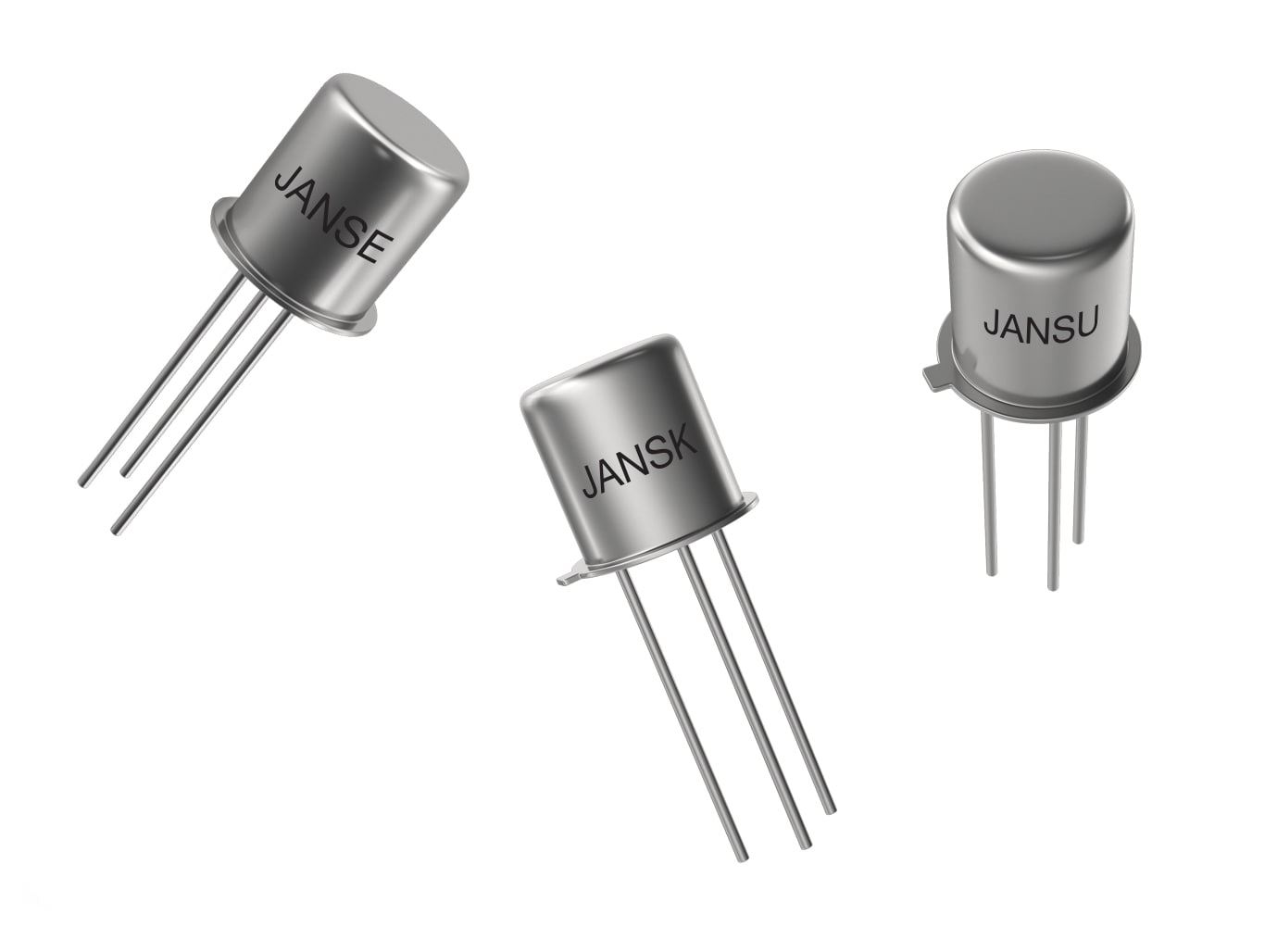
JAN Transistors: Military-Standard Radiation Tolerance for Aerospace and Defense
Discover how our JAN transistors offer military-standard Enhanced Low Dose Radiation Sensitivity (ELDRS), ensuring unmatched reliability and performance in aerospace and defense applications. These transistors are specifically designed to withstand the harsh conditions of space and military environments, providing robust and dependable operation even under low-dose radiation exposure. By meeting stringent military standards, our JAN transistors deliver the reliability and durability required for critical missions and high-stakes operations in the aerospace and defense sectors.
Applications

Aerospace
Our high-performing BJT products can be used in applications that require very high current densities, radiation tolerance and significant weight reduction for successful trips to the Moon, Mars and beyond.

Defense
Our BJTs help address the need for secure, reliable electronics and systems that are used in defense applications, such as vehicles and weaponry. These systems have special requirements such as increased automation, portability, longer mission life and enhanced situational awareness.