
Simplifying Industrial Ethernet: The Industry's Response to Growing Complexity
Industrial Ethernet networks are becoming more complex as automation systems demand higher bandwidth, real-time performance and seamless interoperability. Learn how integrated networking approaches can help design engineers simplify development and accelerate deployment.
Last month, we explored five forces reshaping Industrial Ethernet: deterministic networking, AI and machine vision, modernization initiatives, reliability requirements and increasing security demands. These trends play a huge role in industrial Ethernet and are a few of the challenges that engineers face. These forces are certainly creating new opportunities, but along with this surge in capability comes an increase in design complexity.
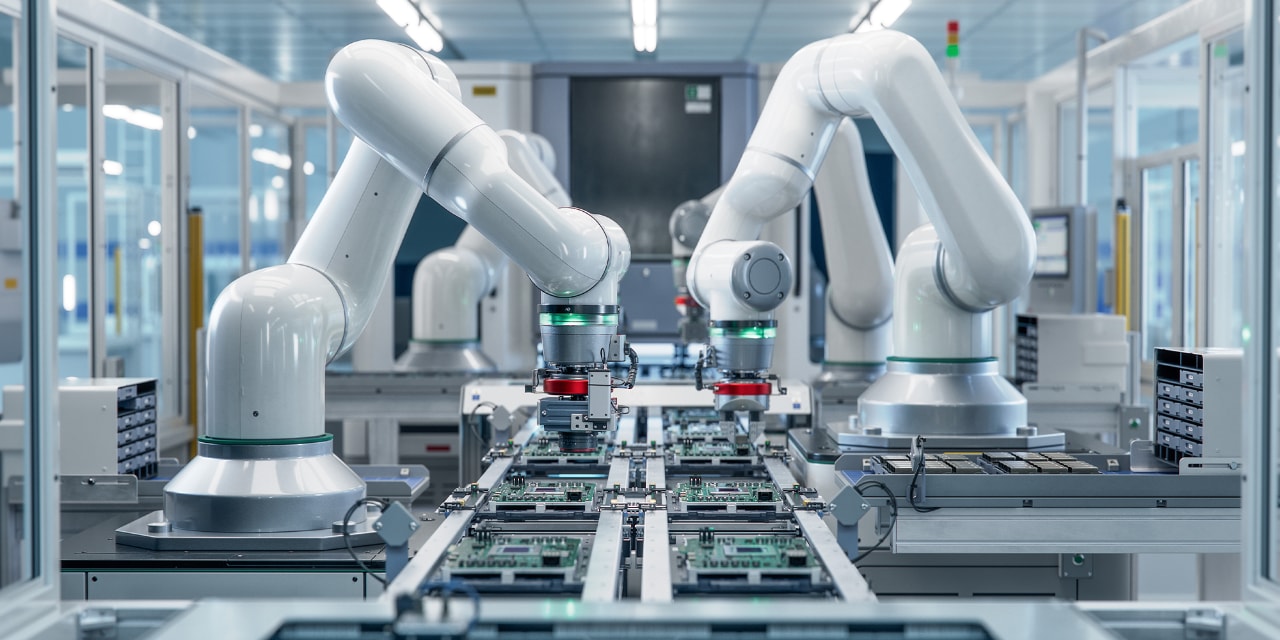
And industrial Ethernet has never been more capable. Networks now connect robotics, machine vision systems, edge devices and real-time control systems across increasingly connected industrial environments. Think of a factory producing and packing components as they move down a conveyor belt. The robotic arms pick, place, assemble or package products. Industrial cameras inspect each product for defects and confirm that all the correct components are present. Industrial edge computer or vision controller processes camera and sensor data while a PLC provides machine control to coordinate conveyers, robots, motors and sensors. All of these processes are connected using industrial ethernet, which connects all the factory systems so information can flow through the production environment.
Bringing all the pieces together in a smart factory, for example, using industrial Ethernet has revolutionized industrial production. Industrial Ethernet is powerful, but it’s a complex system that can quickly become a behemoth of engineering effort and risky deployment.
So how do you simplify this sophisticated new generation of industrial networking? At Microchip, we focus on the whole system, not just a one-off part. We know that organizations are looking beyond individual components and focusing on how effectively an overall networking platform simplifies development across the entire system.
Below are four ways that we enable you to cut through the complexity of industrial Ethernet and simplify development.
- We bring more of the Ethernet architecture under one portfolio.
Industrial Ethernet designs can require multiple technologies across the network, including Ethernet PHYs, switches and controllers as well as TSN, precision timing, EtherCAT® and different physical connectivity options. By bringing these technologies together within a broad portfolio, we can help engineers simplify component selection and integration while creating a more cohesive path from the edge to the network infrastructure. This approach reduces the complexity associated with assembling solutions from multiple sources and gives developers access to complementary hardware, software, evaluation platforms and engineering resources. The result is a more streamlined development experience that can help engineers move from evaluation to deployment with greater speed and confidence.
- We provide a path for different performance requirements.
Industrial Ethernet is not a one-size-fits-all environment. A connected sensor or edge device may have very different networking requirements than a machine-vision system, industrial controller or high-capacity switch. A broad Ethernet portfolio gives engineers greater flexibility to select the connectivity and performance level that fits each part, while providing a path to scale as application requirements evolve. This can help developers support everything from basic device connectivity to higher-bandwidth applications and deterministic, time-sensitive communication without rethinking their entire networking approach. The result is a more flexible foundation for designing industrial networks that can accommodate both current requirements and future performance needs.
- We support prototyping and evaluation.
Industrial Ethernet development often requires engineers to evaluate networking technologies, test different configurations and validate performance before moving to a final design. Evaluation boards, development platforms, reference designs, software and code examples can give engineers a practical starting point for exploring Ethernet devices and features without building everything from the ground up. By providing these resources alongside a broad Ethernet portfolio, we can help developers move more efficiently from initial evaluation and prototyping into system development, reducing development effort and helping teams identify potential integration challenges earlier in the design process.
- We address deterministic networking as part of the ecosystem.
Industrial automation increasingly requires networks to support both high-bandwidth data and time-critical communications without sacrificing predictable performance. By incorporating deterministic networking capabilities such as Time-Sensitive Networking (TSN), precision timing and synchronization alongside a broader Ethernet portfolio, we can help engineers address these requirements as part of a more complete network architecture. This allows developers to design for low-latency, predictable communication while supporting the connectivity, bandwidth and scalability requirements of modern industrial systems. Bringing these capabilities together can also simplify the path toward more advanced real-time networking as applications evolve, helping engineers build industrial networks that are ready for increasingly connected and automated environments.
 |
Simplification is becoming a competitive advantage
Focusing on simplifying a complex network has its advantages and industry-wide attention is shifting toward more integrated networking approaches that help reduce interoperability challenges and streamline development. When technologies are designed to work together more seamlessly, engineering teams can spend less time solving integration problems and more time focusing on innovation, differentiation and application performance.
That trend will only accelerate as industrial Ethernet expands from embedded edge devices and smart sensors to factory-wide infrastructure, AI-enabled automation and connected industrial operations. Future systems will require higher levels of performance, interoperability, security and intelligence. Success will depend not only on the capabilities a network provides, but also on how easily those capabilities can be deployed and scaled.
The next phase of industrial Ethernet innovation is not about adding more technology. It is about removing the barriers to using it.
Want More?
Discover our industrial Ethernet portfolio to see how a comprehensive ecosystem of networking technologies can help you reduce complexity, shorten development cycles and build reliable industrial systems with confidence.