
Separating Real-Time Motor Control From User Experience
Learn how integrated motor-control and processing solutions can accelerate development for connected medical devices. This blog post examines key design considerations for building efficient, responsive respiratory systems.
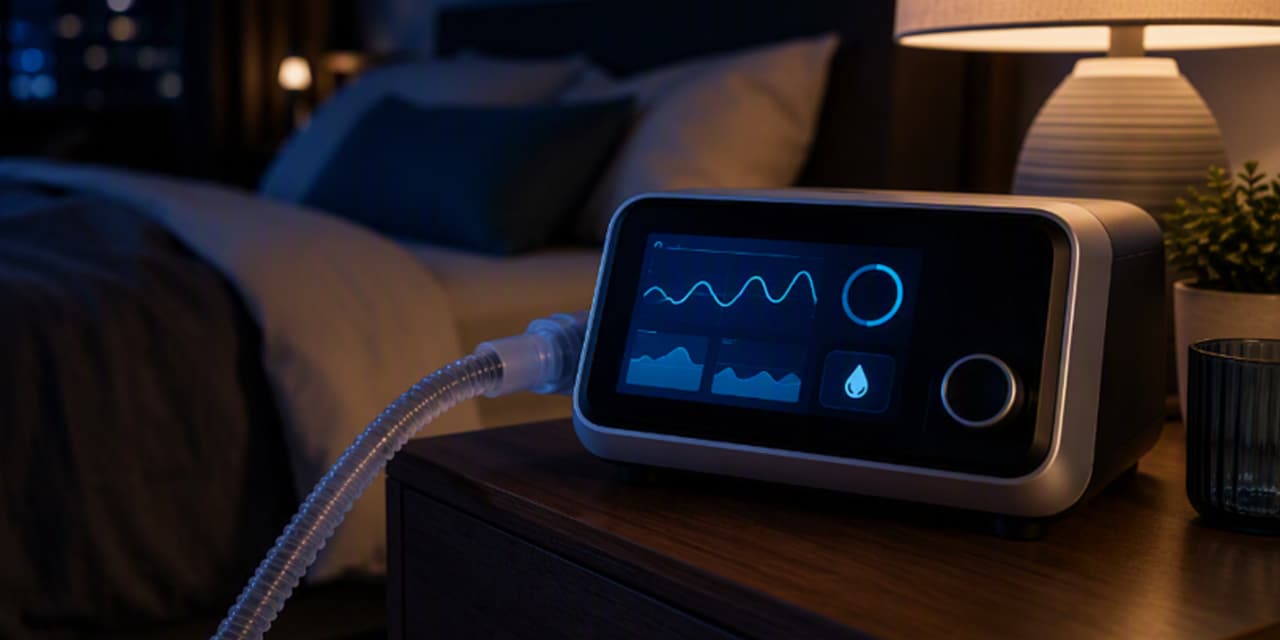
A Reference Architecture for Next-Generation Respiratory Devices
Modern respiratory systems such as CPAP, BiPAP, ventilators and portable oxygen concentrators are expected to deliver far more than basic airflow generation. Developers now face the challenge of combining precise, deterministic motor control with responsive graphical interfaces, advanced monitoring and scalable software architectures. Achieving both simultaneously can be difficult, particularly when safety-critical control loops must operate without interruption while the system also handles user interaction and high-level application tasks.
Our “BLDC Motor Control With Graphical User Interface for CPAP and BiPAP Respiratory Equipment Demonstration Application” reference design addresses this challenge through a dual-processor architecture that separates real-time control responsibilities from user-experience functions.
Separating Control From User Experience
At the center of the design is a high-speed BLDC blower controlled using sensorless Field-Oriented Control (FOC). Responsibilities are divided across two processors:
Processor | Responsibilities |
PIC32MK MCU | Deterministic motor control and safety management |
SAMA7D65 MPU | Graphical user interface and high-level supervision |
This separation allows the control subsystem to maintain predictable timing behavior even when the interface layer is processing visual updates, parameter changes or monitoring data.
Closed-Loop Airway-Pressure Regulation
That architectural distinction is particularly important in respiratory equipment, where pressure stability and response time directly affect therapy quality and patient comfort. The reference design implements closed-loop airway-pressure regulation using integrated feedback from:
- Flow
- Pressure
- Temperature
Cascaded control loops enable the system to adjust blower operation dynamically in response to changing conditions.
Configurable Pressure Ramping
The design also demonstrates configurable pressure ramping, which helps create smoother airflow transitions during therapy. In practical CPAP and BiPAP applications, these transitions can improve comfort by gradually adjusting airway pressure rather than applying abrupt changes. The system additionally supports dual-level speed and pressure control suitable for BiPAP-style operation.
Air-Leak Detection and Recovery
Another notable capability is air-leak detection and recovery. Real-world respiratory systems frequently encounter varying mask fit conditions and unintended leaks. The same closed-loop feedback described above compensates for these conditions automatically, adjusting blower performance to hold target pressure as mask fit changes during a session.
Motor-Control Hardware Platform
From a hardware perspective, the reference platform combines the PIC32MK MCM Motor Control DIM (EV49S83A) with the MCS MCLV-48V-300W development board. The motor-control hardware supports three-phase motor drives for PMSM and BLDC motors and includes the feedback paths needed for advanced motor-control techniques such as sensorless FOC and back-EMF-based operation:
- Current feedback
- Voltage feedback
- Phase feedback
Why Sensorless FOC Matters
That sensorless approach matters most in medical equipment because it removes the physical rotor position sensor from the design entirely. Eliminating sensors can simplify mechanical integration while still supporting precise speed and torque control across a wide operating range.
Graphics and High-Level Supervision
On the MPU side, the SAMA7D65 contributes the graphics and interface capabilities that make richer therapy monitoring practical—visualizing system behavior, displaying live therapy parameters and allowing operational settings to be tuned directly from the interface.
A Scalable Respiratory-System Architecture
The broader value of this reference design lies in its scalability. Although demonstrated in CPAP and BiPAP scenarios, the same architectural principles can extend to ventilators, anesthesia systems, and portable oxygen concentrators. As respiratory devices continue evolving toward connected, feature-rich platforms, separating control and interface domains becomes increasingly useful for maintainability, software partitioning and system robustness.
Key Takeaway
For engineering teams developing respiratory equipment, the more transferable outcome is the partitioning decision itself. As these devices take on more connectivity, monitoring and interface expectations, deciding early which functions must stay deterministic—and which can safely move to a separate processor—shapes how far a platform can scale before it needs re-architecting.
Explore the Demonstration Application
See how the design separates real-time motor control from the graphical user interface while using sensorless FOC and closed-loop airway-pressure regulation. Explore the BLDC Motor Control With Graphical User Interface for CPAP and BiPAP Respiratory Equipment Demonstration Application
FAQ
What is sensorless Field-Oriented Control (FOC) in respiratory equipment?
Sensorless Field-Oriented Control (FOC) is a motor-control technique used to precisely regulate the speed and torque of a Brushless DC (BLDC) motor without requiring a physical rotor position sensor. In respiratory systems such as CPAP and BiPAP devices, sensorless FOC helps maintain stable blower performance, efficient airflow delivery and responsive pressure control while reducing mechanical complexity and component count.
Why do respiratory systems separate motor control from the graphical user interface (GUI)?
Separating motor control from the GUI allows the real-time control subsystem to maintain deterministic timing behavior even while the interface processor handles visualization, alarms, monitoring and user interaction. This architecture helps improve reliability, responsiveness and scalability in safety-critical respiratory devices.
How does closed-loop airway-pressure regulation work in respiratory devices?
Closed-loop airway-pressure regulation continuously measures airflow, pressure and temperature feedback signals and adjusts blower operation dynamically to maintain target therapy conditions. Cascaded control loops help stabilize airway pressure even when patient breathing conditions or mask fit change during operation.
Why is air-leak detection important in CPAP and BiPAP systems?
Air leaks can reduce therapy effectiveness and make it difficult to maintain stable airway pressure. Leak-detection algorithms monitor feedback signals and compensate by adjusting blower performance to help preserve target pressure levels despite changing mask conditions.
What types of medical systems can use this dual-processor architecture?
Although demonstrated for CPAP and BiPAP applications, the architecture can also support ventilators, anesthesia systems and portable oxygen concentrators that require precise airflow regulation combined with advanced monitoring and user-interface functionality.