
Bringing Real-Time Environmental Intelligence Directly to the Edge
How the EnviroSense AI reference design uses the PIC32CZ CA90 Arm® Cortex®-M7-based MCU for on-device environmental classification.
Introduction
Environmental monitoring systems are increasingly expected to do more than log sensor data. Industrial controllers, smart appliances and infrastructure platforms are now being asked to interpret conditions in real time and react locally without waiting for cloud analysis. The challenge is that many engineering teams still associate embedded AI with specialized accelerators, high-end processors or complex software stacks.
Our EnviroSense AI: Edge Intelligence for Environmental Monitoring reference design demonstrates a different approach. Built around the PIC32CZ CA90 MCU and the MPLAB® Machine Learning Development Suite, the design shows how practical environmental classification can run directly on a conventional microcontroller while maintaining familiar embedded development workflows.
The Engineering Challenge
Environmental sensing alone is relatively straightforward. Temperature, humidity and ambient-light sensors are common components in industrial and consumer systems. The more difficult problem is turning those raw measurements into meaningful environmental awareness that can support immediate local decisions.
Traditionally, many systems push sensor data to cloud services for processing or rely on more specialized AI hardware to perform inference tasks. That can increase system complexity, add latency and create dependencies on network availability.
For developers building industrial monitoring systems, smart infrastructure or connected appliances, there is growing value in keeping intelligence at the edge. Local inference allows systems to respond faster, operate with reduced connectivity requirements and simplify deployment in bandwidth-constrained or privacy-sensitive environments.
Understanding the EnviroSense AI Reference Design
The EnviroSense AI reference design is a real-time environmental classification platform that combines multiple sensors with on-device machine learning inference.
The reference design is built on the PIC32CZ CA90 Curiosity Ultra Development Board featuring the PIC32CZ CA90 family of Arm® Cortex®-M7-based MCUs. According to the reference design documentation, the platform also demonstrates dual-screen GUI visualization, with one display presenting raw sensor values and another showing classified environmental states.
Rather than positioning AI as a separate subsystem, the design integrates machine learning directly into the embedded application flow. This is an important distinction because it mirrors how many engineering teams want to deploy AI features: as an extension of an MCU-based control system rather than a separate processing architecture.
How the Solution Works
The system gathers real-time environmental data from onboard sensors and feeds that information into machine learning models developed using the MPLAB Machine Learning Development Suite. Those models are deployed directly onto the PIC32CZ CA90 MCU, where inference executes locally on the device.
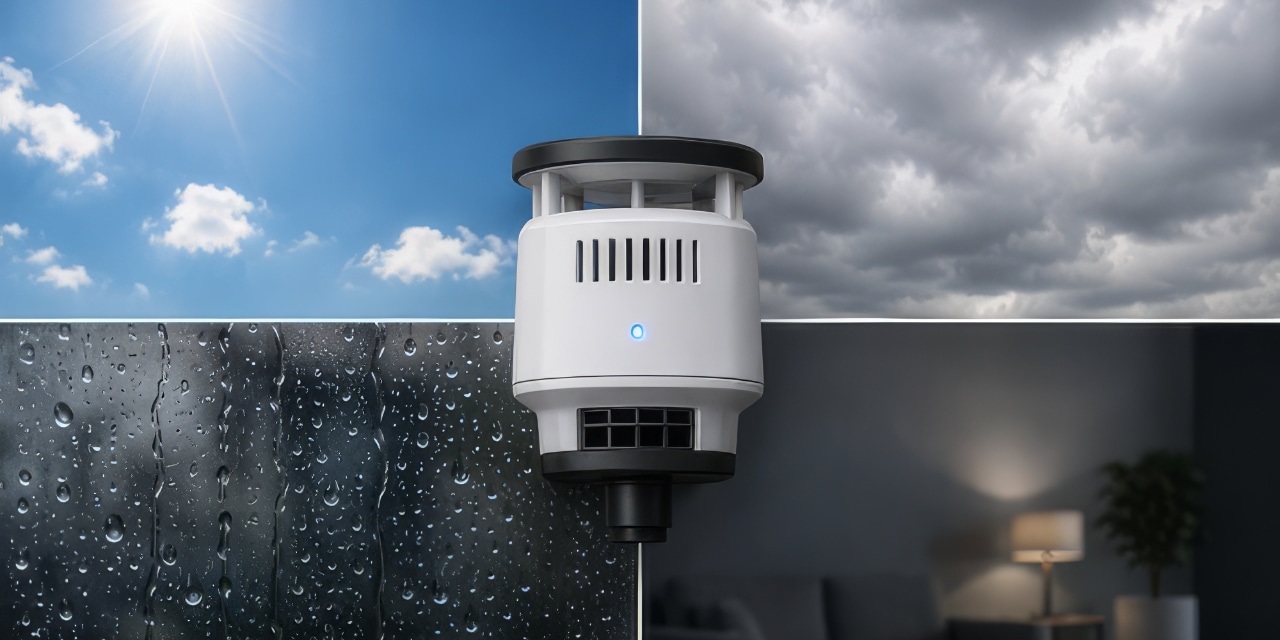
The reference design documentation highlights several environmental classification categories, each derived from a combination of temperature, humidity and ambient-light readings rather than a single measurement source:
- Sunny
- Cloudy
- Humid
- Rainy
- Cool indoors
This multi-sensor approach is important because environmental interpretation often depends on relationships between inputs rather than isolated thresholds. Moderate temperature combined with very high humidity and low ambient light can indicate very different conditions than temperature alone.
The dual-screen GUI described above also reinforces the design’s educational value, letting developers watch raw measurements and resulting classifications change together in real time.
Key Technologies and Capabilities
The MPLAB Machine Learning Development Suite supports embedded ML workflows across MCU platforms, with tooling designed to help developers create and optimize compact models suited to resource-constrained systems.
Beyond AI functionality, the PIC32CZ CA90 family includes integrated connectivity and security features that can support broader industrial and infrastructure applications where environmental intelligence is only one part of a larger embedded system.
Why This Matters to Developers
The practical significance of the EnviroSense AI reference design is the skills gap it closes. Many engineering teams already have deep experience with MCU-based systems but limited exposure to AI-specific hardware architectures. This design lets them evaluate AI integration using development methods they already know, rather than adopting a new toolchain and processing architecture at the same time.
Applications and Design Considerations
The reference design aligns well with applications that benefit from local environmental awareness, including:
- Industrial monitoring systems
- Smart building infrastructure
- Connected appliances
- Sustainability-focused automation
In these environments, local inference can improve responsiveness and reduce dependence on continuous cloud connectivity. Designers should still consider factors such as sensor calibration, environmental variability and model tuning, since real-world conditions can differ significantly across deployment environments.
Key Takeaways
As embedded systems continue moving toward more autonomous local decision-making, developers are looking for ways to integrate AI without dramatically increasing system complexity. Our EnviroSense AI reference design demonstrates that meaningful environmental intelligence can run directly on a standard MCU platform using compact machine learning models and familiar embedded tools.
For engineering teams exploring edge AI adoption, the project provides a concrete example of how real-time classification can become a practical embedded feature rather than a specialized standalone subsystem.
Check out the reference design.
FAQs
Can machine learning run on a standard microcontroller without an AI accelerator?
Yes. Compact machine learning models can run directly on conventional MCUs when the models are sized appropriately for the available resources. The EnviroSense AI reference design demonstrates real-time environmental classification running on a PIC32CZ CA90 MCU without a dedicated neural processing unit.
Why combine multiple sensors for environmental classification?
Environmental conditions are often better identified through relationships between measurements than through any single reading. Moderate temperature combined with high humidity and low ambient light can indicate very different conditions than temperature alone.
What are the advantages of local inference over cloud-based processing?
Local inference allows systems to respond faster, operate with reduced connectivity requirements and simplify deployment in bandwidth-constrained or privacy-sensitive environments.
What should developers consider when deploying environmental ML models?
Sensor calibration, environmental variability and model tuning all affect real-world performance, since conditions can differ significantly across deployment environments.
What is MPLAB Machine Learning Development Suite?
It is a toolset that supports embedded machine learning workflows across MCU platforms, with tooling designed to help developers create and optimize compact models suited to resource-constrained systems.