
Why CoaXPress Continues to Lead High-Performance Vision System Design
Choosing the right interface is critical for next-generation imaging systems. Learn how CoaXPress helps designers balance performance, reliability, scalability and system simplicity for applications ranging from factory automation to intelligent edge vision platforms.
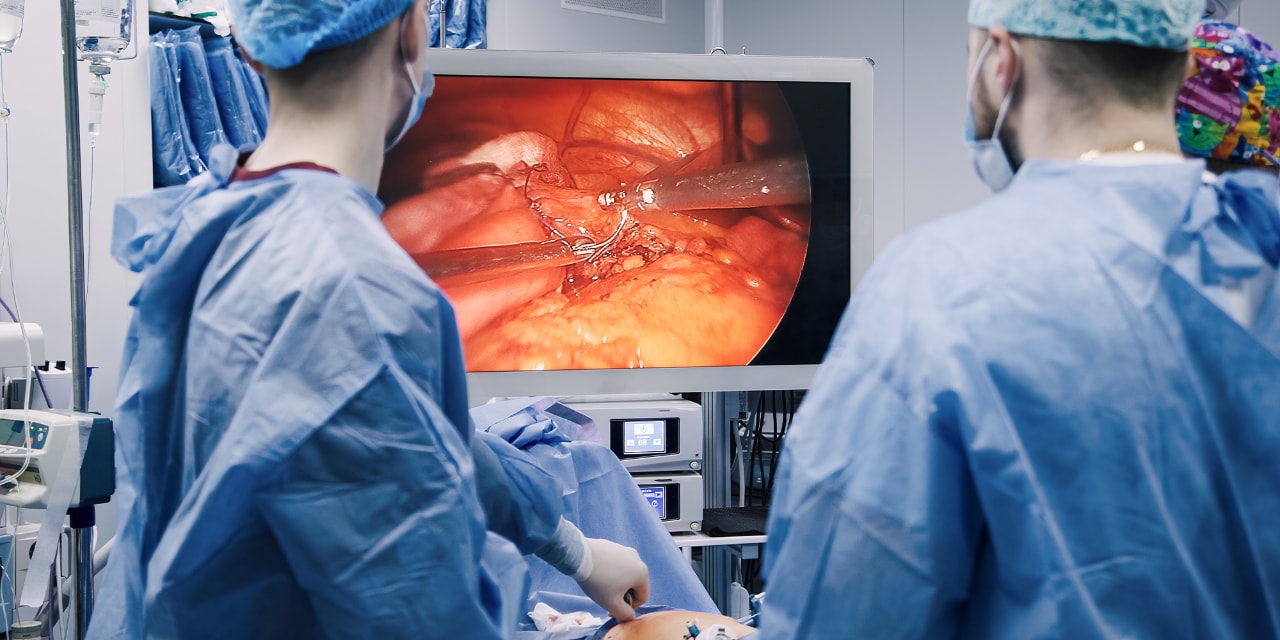
New applications for medical imaging are emerging.
As machine vision and imaging applications continue to evolve, system designers are under constant pressure to move more data faster, and with absolute reliability. Higher resolutions, increased frame rates, AI-enabled analytics and real-time decision-making place significant demands on the interface between the camera and processing hardware. This is where CoaXPress continues to stand out.
Built for Speed and Determinism
CoaXPress was architected specifically for high-performance imaging. It delivers multi-gigabit bandwidth per channel with deterministic, ultra-low latency, providing predictable system behavior. For designers working on inspection, automation, medical, traffic monitoring or scientific imaging, this determinism is critical—especially when precise timing and synchronization directly affect results.
Originally introduced at 6.25 Gbps, CoaXPress now supports speeds up to 12.5 Gbps per cable while maintaining robust signal integrity and low latency. Multi-lane configurations enable scalable bandwidth without forcing a complete redesign of the system architecture.
Compact Cameras Without Thermal Compromise
As embedded vision systems become smaller and more portable, physical size and thermal efficiency become increasingly important. This is one area where coaxial-based CoaXPress solutions offer a major advantage over fiber-based alternatives.
Fiber implementations typically require bulky QSFP optical modules and associated optical transceivers, which increase overall camera size and limit how compact a design can become. In contrast, CoaXPress over coax enables significantly smaller camera form factors by eliminating the need for large optical modules.
Power consumption is another key differentiator. Fiber-based solutions generally consume substantially more power because of the optical transmitters and receivers required at each end of the link. Higher power dissipation often forces designers to add heatsinks and thermal management structures, increasing both system size and cost. CoaXPress over coax avoids many of these thermal challenges with highly integrated, low-power devices that simplify compact camera design.
In addition, CoaXPress uniquely supports simultaneous data, control, triggering and power delivery over a single cable. Fiber-based systems cannot provide power over the same optical cable, requiring separate power infrastructure that adds complexity, connectors and cost.
Long Cable Reach With Real-World Reliability
CoaXPress enables long cable runs over standard coaxial cable while maintaining high bandwidth and deterministic performance. Designers can place cameras far from processing hardware without compromising image quality or timing accuracy.
Equally important is cable durability in demanding industrial environments. Fiber cables are sensitive to repeated flexing and bending, making them less suitable for robotics, motion systems and applications involving continuous movement. In many cases, fiber cables also require in-field assembly, which is very delicate. Coaxial cables provide significantly higher flex tolerance and mechanical robustness, making them better suited for harsh factory automation and machine vision deployments.
Coaxial infrastructure also simplifies installation and maintenance. A single rugged cable carrying power, video, control and triggering reduces overall wiring complexity and improves long-term reliability.
Designed for Long Operational Lifetimes
Reliability over years of continuous operation is critical for industrial and embedded vision systems. Optical transmitters used in fiber solutions have finite operating lifetimes and can degrade over time, especially in thermally demanding environments. This can impact long-term system reliability and maintenance schedules.
CoaXPress over coax avoids these optical aging concerns while enabling highly reliable, low-maintenance system architectures designed for extended operational life.
Scalable for Today and Tomorrow
As imaging requirements continue to grow, CoaXPress scales with them. Modern systems increasingly require support for higher-resolution sensors, multiple synchronized cameras and AI-assisted image processing at the edge.
CoaXPress provides a future-ready path with scalable bandwidth, low latency and support for long cable distances without sacrificing simplicity. Microchip continues to invest in advancing CoaXPress technology to meet evolving industry demands, including higher data rates, compact embedded vision systems and AI-enabled imaging platforms.
A Mature and Proven Ecosystem
CoaXPress is supported by a well-established ecosystem of cameras, frame grabbers, FPGAs, development tools and interoperability standards. This maturity gives designers confidence when developing systems intended for long production lifecycles and industrial deployment.
Our CoaXPress solutions build on this ecosystem with low-power, highly integrated devices designed to simplify implementation while delivering industry-leading performance.
Why Revisit CoaXPress Now
While new interface technologies continue to emerge, few can match CoaXPress’s combination of bandwidth, determinism, power delivery, cable reach, compact implementation and real-world reliability.
For designers evaluating fiber-based approaches, it is important to consider the practical tradeoffs: larger QSFP modules, increased power consumption, thermal management requirements, inability to deliver power over the same cable, limited cable flex capability, delicate in-field assembly and finite optical transmitter lifetime.
CoaXPress continues to provide an elegant and highly optimized solution for demanding imaging systems—especially where compact size, thermal efficiency, reliability and deterministic performance matter most.
If your application demands uncompromising imaging performance, it may be time to take another look at what Microchip’s CoaXPress solutions can deliver.
Learn more and explore our CoaXPress solutions on our web page.